Is Sommarøy Really a "Time-Free" Zone? The Story Behind Norway's Viral No-Clocks Village
In 2019 the world believed a Norwegian island abolished time itself. Here is what was real, what was staged, and why the island is still worth the trip.
Last updated: August 31, 2026
What Was the "Time-Free Zone" Story, Exactly?
In June 2019, a press release went out under Visit Norway's name describing Sommarøy, a small coastal island about 70km west of Tromsø, as a community petitioning the Norwegian government to become the world's first "time-free zone." The story included photos of a town hall meeting and a "handover" of signatures to government representatives in Oslo. Major outlets including the BBC, CNN, NPR, Time and The Guardian all picked it up within days.
4½–5 hours for sommarøy fjord tour with salmon picnic. Book The Sommarøy Road Trip
The premise, on its face, was not absurd. Sommarøy really does experience roughly ten weeks of uninterrupted daylight each summer, from mid-May to late July, when the sun never dips below the horizon. The idea that residents living through months without a sunset might genuinely question the point of a wristwatch is a plausible human story, which is exactly why it traveled as far as it did.
Was the Petition Real?
No. The petition and the photographs of islanders handing signatures to government officials were staged as part of a marketing campaign by Visit Norway, the country's official tourism board. Innovation Norway, the government body responsible for Visit Norway, later apologized publicly after journalists established that the "grassroots petition" presented in the original press release had been organized by the tourism board itself rather than emerging spontaneously from residents.
That does not mean nobody on Sommarøy ever joked about the idea, informal chatter like that is easy to imagine on any island with permanent summer daylight, but the organized petition, the town hall framing and the staged handover photos were manufactured for press coverage rather than a documentation of an actual local movement.
Why Did the Story Spread So Fast?
Three things lined up. First, the underlying astronomical fact is real and genuinely strange to anyone who has never experienced it: a place where the sun simply does not set for weeks at a time. Second, the press release was written and distributed like a real news story rather than obvious marketing copy, complete with named local figures and specific dates. Third, "a village wants to abolish time" is the kind of quirky, shareable premise that travels through international wire services and social media almost regardless of how carefully it gets fact-checked on the way, especially when there is a striking photo attached.
The combination of a true, strange-sounding fact (permanent summer daylight) wrapped around a fabricated human-interest hook (an organized petition) is a familiar shape for viral tourism stories, and it worked exactly as intended before the staging came to light.
Does Sommarøy Actually Have No Time Zone Today?
No. Sommarøy runs on standard Central European Time, the same as the rest of mainland Norway, and it always has. Clocks work normally, ferries and buses run on published schedules, and shops open and close at set hours exactly as they do anywhere else in the country. The "time-free zone" was never implemented, because it was never a genuine policy proposal to begin with.
| Sommarøy abolished clocks and time zones | Myth. It runs on standard Norwegian time today, as it always has. |
| Residents petitioned the government to go time-free | Staged. The petition and handover photos were a Visit Norway marketing campaign. |
| The island has close to 24-hour daylight in summer | Real. Roughly mid-May to late July, the sun does not set at all. |
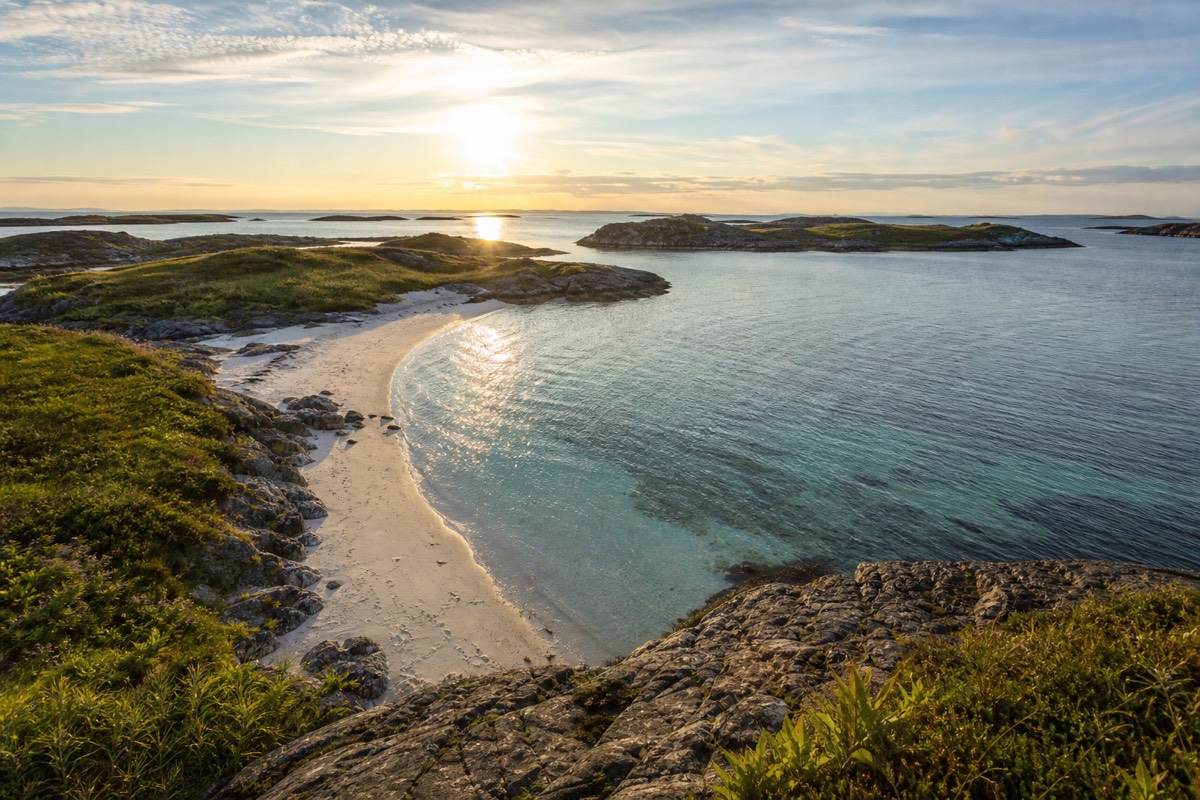
| Sommarøy is a real place worth visiting | Real. White sand beaches, turquoise water and island scenery about 70km from Tromsø. |
Check your travel date before arranging other plans. The Sommarøy road trip includes a salmon picnic and professional photos. Check Your Sommarøy Tour Date
Why the Midnight Sun Made the Story Believable
Tromsø and the surrounding region, including Sommarøy, sit far enough north of the Arctic Circle that the sun stays above the horizon continuously for weeks around the summer solstice, a real phenomenon known as the midnight sun. For anyone who has experienced it, the ordinary rhythm clocks are built around, sunrise, midday, sunset, simply stops applying in the usual way, which is part of why the original story felt true rather than obviously fabricated. The same effect runs in reverse in winter, when the polar night brings weeks of continuous darkness instead, which is precisely the period this site's own guides recommend for northern lights viewing.
Is Sommarøy Worth Visiting for Real, Not Because of the Myth?
Yes, on its own terms. Sommarøy is a genuine coastal Arctic village about 70km west of Tromsø, known for white sand beaches, turquoise water, dramatic small-island scenery and a slower pace than the city. It sits close enough to Tromsø for a half-day or full-day trip, with real chances to spot whales, eagles, reindeer and moose along the way, depending on the season.
Reaching it independently requires a rental car, since there is no direct bus service built for visitors on a tight schedule. A guided half-day trip handles the drive, includes a salmon lunch on the beach, and turns what would otherwise be a full day of independent logistics into a structured half-day out from Tromsø.
FAQs
Discover what fits this part of your trip. The Sommarøy road trip includes a salmon picnic and professional photos. Explore Sommarøy Fjord Tour With Salmon Picnic
Is it true that there is no time in Sommarøy, Norway?
No. Sommarøy runs on standard Norwegian time like everywhere else in the country, and always has. In June 2019, Norway's official tourism board publicized a story claiming residents wanted to abolish clocks during the island's 24-hour daylight season, and it went viral worldwide. It later came out that the "petition" was a staged marketing campaign, not a genuine grassroots movement, and Innovation Norway apologized for presenting it as real news.
Check your travel date before arranging other plans. The Sommarøy road trip includes a salmon picnic and professional photos. Check Your Sommarøy Tour Date
Is Sommarøy really time free?
No, but the story it is based on is real in one sense: Sommarøy genuinely gets around ten weeks of uninterrupted daylight each summer, when the sun does not set at all. That real astronomical fact is what made a fabricated "time-free zone" story believable enough to be picked up by BBC, CNN, Time and dozens of other outlets before anyone had checked whether the underlying petition was genuine.
Was the Sommarøy time-free petition real?
No. The petition and the photos of islanders handing it to government officials in Oslo were staged as part of a press campaign by Visit Norway, the country's official tourism marketing arm. Innovation Norway, the government body that oversees Visit Norway, later apologized publicly for presenting a promotional stunt as an organic news story.
Why did the Sommarøy time-free story spread so fast?
Because the premise sounded just plausible enough. Sommarøy really does have permanent daylight for about ten weeks in summer, so the idea that residents might genuinely want to stop watching the clock is not absurd on its face. Combined with striking staged photos and a press release worded like real news rather than marketing copy, that plausibility is exactly what let a fabricated petition travel through major outlets worldwide before it was debunked.
Is Sommarøy worth visiting?
Yes, on its own merits rather than the myth. It is a genuine coastal Arctic village around 70km west of Tromsø, known for white sand beaches, turquoise water and dramatic island scenery rather than for anything to do with clocks. It requires a rental car to reach independently, or a guided half-day trip that handles the drive and includes a salmon lunch.
Check your travel date before arranging other plans. The Sommarøy road trip includes a salmon picnic and professional photos. Check Your Sommarøy Tour Date
Check Your Tour Date
Check your Sommarøy date before arranging separate transport. This road trip combines the fjords and islands with a salmon picnic and professional photos.
Adjust activity, timing or group needs
General recommendations: confirm dates and group requirements
A rental car gives the most flexibility for visiting Sommarøy from Tromsø. If you prefer public transport, check the current bus and ferry connections for your exact date and allow wide margins, since timings may not suit a compact sightseeing visit.
Booking takes place with the provider. Prices, exact departures and available options are shown there. We may earn a commission when you book through these links.