Tromsø vs Iceland, Rovaniemi, Svalbard and Lofoten: Which Is Best for the Northern Lights?
Latitude, season length, scenery and access, compared honestly rather than picking a winner that fits everyone.
Last updated: August 31, 2026
| Tromsø, Norway | 69.65°N | Late August to mid April | Direct flights from Oslo and several European hubs |
| Reykjavik, Iceland | 64.15°N | September to mid April | Widely connected, cheap transatlantic hub |
| Rovaniemi, Finland | 66.5°N (on the Arctic Circle) | September to March | Direct flights from Helsinki, seasonal routes from Europe |
| Longyearbyen, Svalbard | ~78.2°N | Late August to mid April; 24-hour darkness Nov-Feb | Only reachable via Oslo or Tromsø |
| Svolvær, Lofoten | ~68.2°N | September to mid April | Flights via Bodø or Tromsø, or the coastal ferry |
Is Tromsø or Reykjavik (Iceland) Better for the Northern Lights?
Tromsø sits roughly 5.5 degrees of latitude farther north than Reykjavik, and that gap matters more than it sounds. The closer a location sits under the auroral oval, the ring of activity centered on the magnetic pole, the less solar activity it takes to produce a display directly overhead rather than a faint glow low on the horizon. Iceland still sees real aurora regularly, but Tromsø's position generally means more nights where a moderate display is directly overhead rather than a distant smear.
5–8 hours for aurora hunt with meal and photos. Book The Aurora Hunt
Iceland answers back on practicality. Reykjavik is one of the best-connected small cities in the North Atlantic, with cheap, frequent transatlantic flights that make it an easy stopover rather than a dedicated trip for many North American travelers, and its own well-developed aurora tour industry. If minimizing flight cost and travel time is the priority, Iceland often wins on logistics even where Tromsø has a statistical edge on darkness.
Is Tromsø or Rovaniemi (Finnish Lapland) Better?
Rovaniemi sits almost exactly on the Arctic Circle, noticeably south of Tromsø's latitude, but Finnish Lapland's continental winter climate, cold and dry rather than coastal and damp, produces some of the most reliably clear skies of any of these five destinations. Clear skies matter as much as raw latitude: an aurora directly overhead is invisible under solid cloud cover.
Tromsø's coastal position brings milder temperatures but more changeable weather blown in off the Norwegian Sea, which is exactly why chase tours here are built around mobile, small-group vehicles that drive toward the clearest patch of sky rather than waiting in one fixed spot. Rovaniemi leans the opposite direction, toward glass igloos and heated aurora domes that let you watch in comfort from one location, betting on its own more stable skies rather than mobility.
Is Tromsø or Svalbard Better?
Svalbard sits at roughly 78°N, far enough north that it moves inside the polar cap rather than sitting directly under the auroral oval the way Tromsø does. That is a genuine tradeoff, not simply "farther north is better": conditions inside the polar cap can be more diffuse and less predictable than the concentrated band of activity Tromsø sits under, even though Svalbard's dark season is longer and its wilderness is starker and more remote than anywhere else on this list.
Svalbard is also harder and more expensive to reach, colder, and far more remote, with Longyearbyen reachable only via Oslo or Tromsø itself. It rewards travelers who specifically want the most extreme, most isolated version of an Arctic trip. Tromsø is the more accessible, more moderate choice for a first Arctic visit, with a real city's infrastructure, restaurants and flight connections behind it.
Is Lofoten or Tromsø Better?
Lofoten sits at a similar latitude to Tromsø, a little farther south, so the raw aurora odds between the two are broadly comparable rather than one clearly outperforming the other. The real difference is what is happening on the ground while you wait for the sky to do something.
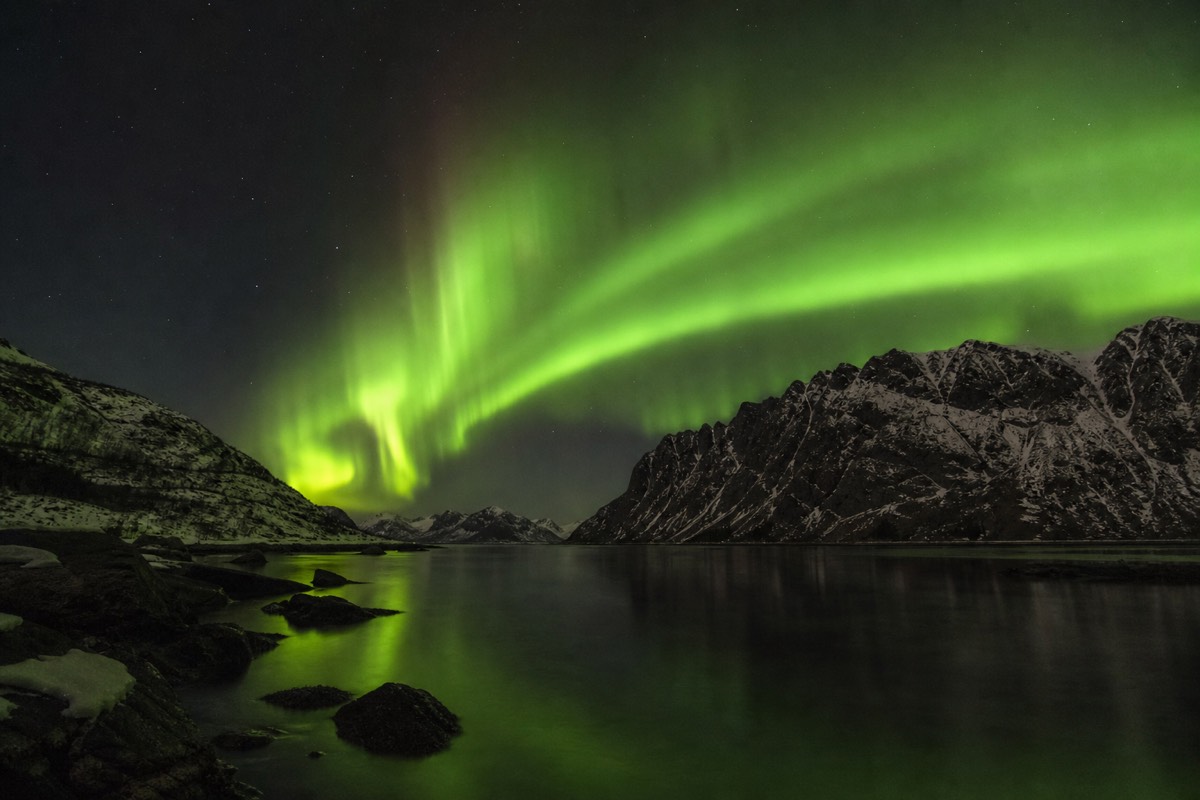
Lofoten's jagged peaks rising straight out of the sea, its red fishing cabins and its dramatic, compressed coastline make it arguably the most visually striking backdrop for an aurora photograph anywhere in Norway. Tromsø answers with infrastructure: more frequent flights, a wider range of tour operators and vehicle types, and a genuine small city's worth of restaurants and hotels rather than a scattered archipelago of fishing villages with more limited capacity.
So Which One Should You Actually Book?
If a strong overhead display on an average night is the priority and you want a real city's infrastructure behind the trip, Tromsø is the balanced choice. If minimizing cost and flight time matters most, Iceland is hard to beat. If dry, reliably clear skies matter more to you than latitude, Rovaniemi's climate does real work in your favor. If the photograph itself is the goal, Lofoten's coastline is difficult to match. If you want the most remote, most extreme version of the Arctic and are willing to pay and travel for it, Svalbard is the one built for that. None of these are wrong choices. They are different bets on the same underlying phenomenon.
If Tromsø is the destination that comparison points you toward, here's what actually matches what you want out of the night:
FAQs
Check your travel date before arranging other plans. The minibus aurora chase includes warm suits, camera-setting help and high-resolution photos. Check Small-Group Aurora Dates
Is Tromsø or Iceland better for the northern lights?
Tromsø sits about 5.5 degrees of latitude farther north than Reykjavik, close enough to the auroral oval that weaker geomagnetic activity can still produce a visible display overhead rather than a faint glow on the horizon. Iceland answers back with cheaper, more frequent transatlantic flights and a shorter overall trip for many travelers, plus its own strong hunting infrastructure. Neither is simply better: Tromsø gives you a statistically stronger shot on an average night, Iceland gives you an easier and often cheaper trip to get there.
Discover what fits this part of your trip. The minibus aurora chase includes warm suits, camera-setting help and high-resolution photos. Explore Small-Group Aurora Chase With HD Photos
Is Tromsø or Rovaniemi better for the northern lights?
Rovaniemi sits almost exactly on the Arctic Circle, noticeably farther south than Tromsø, but Finnish Lapland's cold, dry continental winters produce some of the clearest, most stable skies of any of these destinations, which matters as much as latitude does. Tromsø's coastal position means milder temperatures but more variable cloud cover blown in off the Norwegian Sea. Rovaniemi also leans harder into glass igloos and heated aurora domes for comfortable viewing, while Tromsø leans into mobile, small-group chase tours that drive to find a clear patch of sky.
Check your travel date before arranging other plans. The minibus aurora chase includes warm suits, camera-setting help and high-resolution photos. Check Small-Group Aurora Dates
Is Tromsø or Svalbard better for the northern lights?
Svalbard, at roughly 78°N, sits far enough north that it moves inside the polar cap rather than sitting under the auroral oval the way Tromsø does, which trades some overhead reliability for the most extreme and remote conditions of any of these five destinations. Svalbard's dark season is longer and its wilderness starker, but it is also harder and more expensive to reach, and colder. Tromsø is the more accessible, more moderate choice; Svalbard is the one for travelers who specifically want the most remote version of the experience.
Is Lofoten or Tromsø better for the northern lights?
Lofoten sits at a similar latitude to Tromsø, a little farther south, so the aurora odds are broadly comparable. The real difference is scenery: Lofoten's jagged peaks rising straight out of the sea, its red fishing cabins and its dramatic coastline make it arguably the most visually striking backdrop for an aurora photo in Norway. Tromsø answers with far better infrastructure, more frequent flights, and a wider range of tours and operators, since it is a genuine small city rather than a scattered archipelago of fishing villages.
Check your travel date before arranging other plans. The minibus aurora chase includes warm suits, camera-setting help and high-resolution photos. Check Small-Group Aurora Dates
If Tromsø Is the One You're Booking
Once the comparison points you here, the usual first step is a night chase that leaves town and looks for a gap in the cloud.
Check Your Tour Date
Planning an aurora evening? Check your Tromsø date before arranging dinner or other plans; this guided hunt includes a warm meal, thermal suit and web-size souvenir photos.
Adjust activity, timing or group needs
General recommendations: confirm dates and group requirements
A tour is not required to compare these destinations or attempt independent viewing. In Tromsø, check official weather and aurora forecasts, choose a dark location that is safe and legally accessible, arrange transport back before leaving the city, and keep a flexible indoor evening as a backup because cloud and aurora activity can change.
Compare Your Group’s Real Costs
Use current quotes in the same currency. Include transport, fuel, parking and equipment in your DIY total. Include all participants and extras in the tour total.
Booking takes place with the provider. Prices, exact departures and available options are shown there. We may earn a commission when you book through these links.