Best Time to Visit Tromsø: Complete Seasonal Guide 2026-2027
Best time to visit Tromsø: Winter Nov-Feb for Northern Lights (60-80% success, -4°C to -10°C) or summer Jun-Jul for midnight sun (10-15°C). Complete 2026-2027 guide.
Last updated: August 31, 2026
TL;DR
The best time to visit Tromsø depends on your priorities: winter (November-February) for Northern Lights with 60-80% sighting rates across 3-4 nights, polar night darkness, and winter activities (a guided hunt can handle transport, but sightings are not guaranteed); or summer (June-July) for midnight sun with 24-hour daylight, hiking, and warmest temperatures 10-15°C (50-59°F). Northern Lights season spans October-March with peak viewing November-February during maximum darkness (0-6 hours daylight). Polar night November 21-January 21 means sun never rises creating perpetual twilight ideal for aurora hunting. Summer May-August provides midnight sun May 20-July 22 with continuous daylight enabling endless hiking, fishing, and fjord exploration. Winter temperatures average -4°C to -10°C (15-25°F), summer 8-15°C (46-59°F). December-February sees highest crowds and prices (€120-200 accommodation) during peak Northern Lights season. June-July delivers warmest weather, driest conditions, peak midnight sun but also high tourist volumes. Shoulder seasons September-October and March-April offer moderate crowds, 20-30% lower prices, though transitional weather and limited phenomenon visibility. Worst time is April with aurora season ending, snow blocking trails, insufficient darkness, unpredictable weather. Book 3-6 months ahead for winter peak season, 2-3 months for summer. Activities vary dramatically: dog sledding, snowmobiling, whale watching (November-January only) in winter; hiking, fishing, midnight sun tours in summer.
5–8 hours for aurora hunt with meal and photos. Book The Aurora Hunt
Choose a departure that fits your dates; natural conditions remain uncertain. The 5–8-hour aurora hunt includes a warm meal, thermal suit and web-size photos. Explore Aurora Hunt With Meal And Photos
When Is the Best Time to Visit Tromsø Overall?
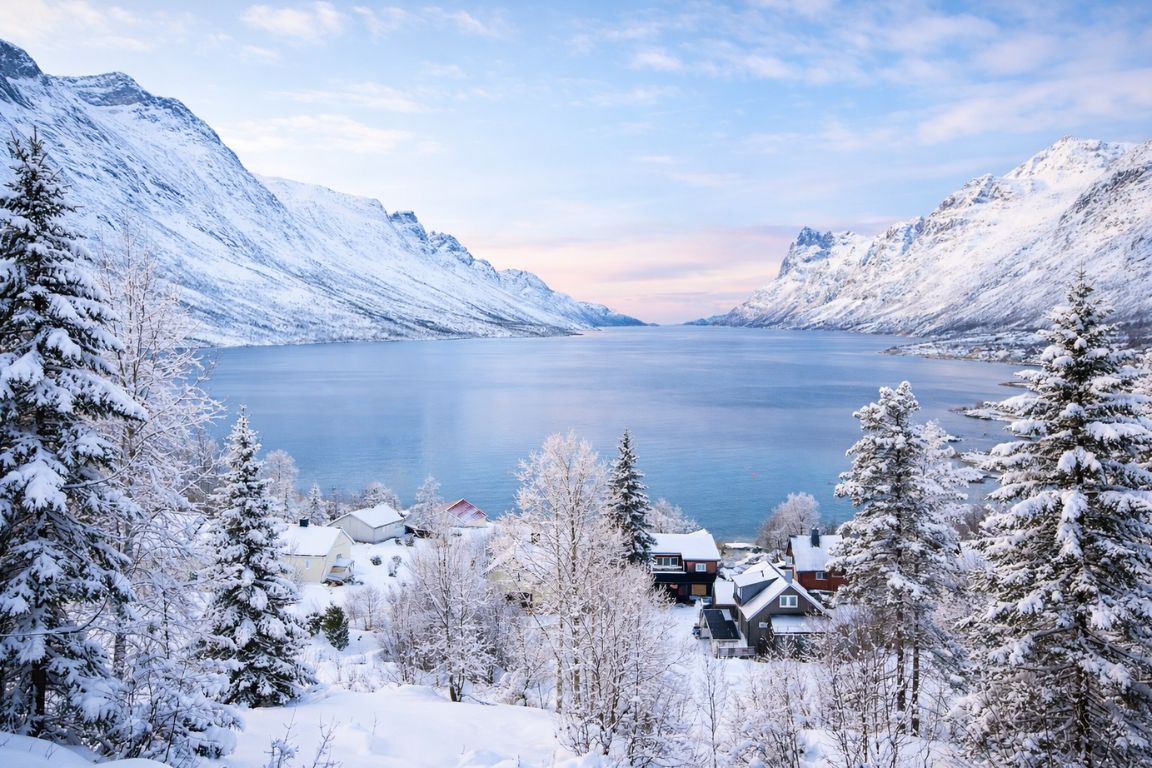
Winter November through February delivers the optimal Northern Lights experience with maximum darkness during polar night, highest aurora activity, and complete availability of winter activities including dog sledding and whale watching. A guided hunt can handle transport, but sightings are not guaranteed.
Summer June through July provides peak midnight sun conditions with the warmest temperatures, driest weather, and access to all hiking trails free from snow, enabling 24-hour outdoor exploration under endless daylight.
The choice between winter and summer represents fundamentally different Arctic experiences rather than one being objectively “better,” with your priorities determining the ideal season.
Table: Winter vs Summer Quick Comparison – Best Time to Visit Tromsø
| Factor | Winter (Nov-Feb) | Summer (Jun-Jul) | Winner | Why It Matters |
|---|---|---|---|---|
| Main Phenomenon | Northern Lights | Midnight Sun | Different experiences | Core reason to visit Arctic |
| Daylight Hours | 0-6 hours (polar night) | 24 hours (no sunset) | Depends on preference | Defines entire experience |
| Temperature | -4°C to -10°C (15-25°F) | 10-15°C (50-59°F) | Summer comfort | Affects activity options |
| Northern Lights Chance | 60-80% over 3-4 nights | Impossible (too light) | Winter essential | Can’t see in daylight |
| Hiking Access | Limited (snow/ice) | Full trail access | Summer | Safety and variety |
| Tourist Crowds | Very High | High | Neither | Both are peak seasons |
| Prices | Highest (€120-200) | High (€100-180) | Summer slightly cheaper | Accommodation costs |
| Weather Reliability | Variable (snow/clouds) | More stable, less rain | Summer | Trip planning certainty |
| Booking Timeline | 3-6 months ahead | 2-3 months ahead | Winter more critical | Availability concerns |
| Activity Variety | Dog sledding, snowmobile, aurora tours | Hiking, fishing, fjord cruises | Tie (different types) | Depends on interests |
Winter dominates Tromsø tourism with 60-70% of annual visitors arriving November-February specifically for Northern Lights hunting during optimal darkness conditions.
Summer attracts nature enthusiasts, hikers, and photographers wanting midnight sun experiences and access to mountain trails impossible to reach during winter months.
The seasonal decision cannot be compromised – Northern Lights require winter darkness (October-March) while midnight sun demands summer light (May-August), making year-round visits necessary to experience both phenomena.
First-time Arctic visitors typically choose winter for the magical Northern Lights experience despite challenging cold, while returning visitors often select summer to experience the dramatically different midnight sun environment.
Most travelers should prioritize winter (November-February) if Northern Lights top their bucket list, accepting cold and darkness as necessary conditions for aurora viewing success.
What Makes November-February the Best Time for Northern Lights?
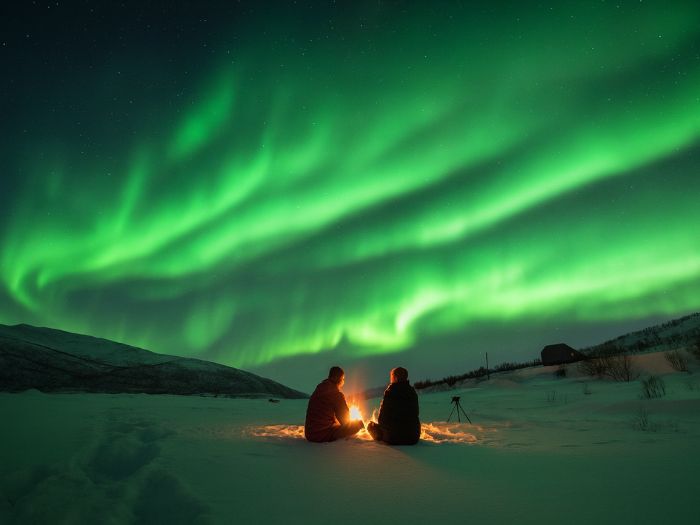
November through February provides 6+ hours of darkness nightly with polar night November-January creating 24-hour darkness ideal for Northern Lights viewing without timing constraints.
This period coincides with peak solar activity cycles and optimal geomagnetic conditions, delivering the strongest most frequent aurora displays of the entire year.
Winter’s clear cold nights (-10°C to -15°C/-5°F to 5°F) produce less cloud cover than autumn/spring transition periods, improving visibility of Northern Lights when they appear.
Which are the best months to see the Northern Lights in Tromsø? Our seasonal breakdown compares November through February with success rates, darkness hours, and weather stability.
Table: Northern Lights Season Month-by-Month Breakdown
| Month | Darkness Hours | Aurora Strength | Weather | Crowds | Prices | Success Rate 3-4 Nights | Why Visit | Why Skip |
|---|---|---|---|---|---|---|---|---|
| September | 12-16 hrs | Weak-Moderate | Variable, rainy | Low | Medium | 40-50% | Low crowds, cheaper | Aurora season just starting |
| October | 6-12 hrs | Moderate | Deteriorating | Medium | Medium-High | 55-65% | Autumn colors, moderate crowds | Weather unstable |
| November | 0-6 hrs (polar night begins) | Strong | Cold, snowy | High | High | 70-75% | Polar night magic starts | Full winter not arrived |
| December | 0 hrs (polar night) | Very Strong | Dark, cold | Very High | Highest | 75-80% | Christmas atmosphere, max darkness | Extreme crowds, prices |
| January | 0-2 hrs (polar night) | Very Strong | Very cold | Very High | Highest | 75-80% | Peak aurora conditions | Coldest month -15°C |
| February | 6 hrs (sun returns) | Strong | Cold, improving | Very High | Highest | 70-75% | Sun returns, still great aurora | Still expensive, crowded |
| March | 12 hrs | Moderate-Strong | Variable | High | High | 60-70% | Extended twilight, spring skiing | Aurora season ending |
Polar night November 21 through January 21 means the sun never rises above Tromsø’s horizon at 69°N latitude, creating perpetual deep blue twilight and complete darkness perfect for aurora viewing.
December-January delivers the strongest Northern Lights displays with KP index frequently reaching 3-5 creating vivid colorful auroras visible even with moderate light pollution.
The success rate over 3-4 nights reaches 70-80% during November-February accounting for weather variability, versus 40-50% during shoulder months September-October or March.
January represents the coldest month with temperatures -10°C to -15°C (5-15°F) and windchill making it feel -20°C to -25°C (-5°F to -15°F), requiring extreme cold weather gear.
February offers the best balance with sun returning creating few hours of daylight while darkness remains sufficient for excellent Northern Lights viewing without January’s extreme cold.
Christmas through New Year’s week sees absolute peak crowds and prices spiking 40-50% above normal winter rates, requiring 4-6 months advance booking for any accommodation.
November provides excellent aurora viewing as polar night begins while avoiding extreme December-January cold and crowds, making it increasingly popular among experienced aurora hunters.
The three-month core season December-February delivers the most reliable Northern Lights experiences justifying the cold, darkness, and expense for first-time Arctic winter visitors.
For expertly guided Northern Lights tours maximizing winter conditions, book at / where we chase optimal aurora displays.
Choose a departure that fits your dates; natural conditions remain uncertain. The minibus aurora chase includes warm suits, camera-setting help and high-resolution photos. Explore Small-Group Aurora Chase With HD Photos
Why Are June-July the Best Summer Months?
June-July provides peak midnight sun with 24-hour continuous daylight enabling hiking, fishing, and exploration at any hour without sleep schedule constraints.
These months deliver Tromsø’s warmest temperatures averaging 10-15°C (50-59°F) making extended outdoor activities comfortable versus cooler shoulder months requiring heavier layers.
June-July offers the driest weather of the entire year with less rainfall than any other period, maximizing hiking trail access and outdoor activity reliability.
Start planning your visit to Tromsø with our complete guide covering when to go, how long to stay, what to book in advance, and realistic budget expectations for 2026-2027.
Table: Summer Season Month-by-Month Breakdown
| Month | Daylight Hours | Temperature | Rain Days | Hiking Access | Crowds | Prices | Why Visit | Why Skip |
|---|---|---|---|---|---|---|---|---|
| May | 18-24 hrs (midnight sun begins) | 6-10°C (43-50°F) | 10-12 days | Trails opening, some snow | Medium | Medium | Shoulder season pricing, aurora possible early month | Snow still on high trails |
| June | 24 hrs (full midnight sun) | 10-13°C (50-55°F) | 8-10 days | Full access | High | High | Warmth, full trail access, driest month | Peak crowds starting |
| July | 24 hrs (full midnight sun) | 12-15°C (54-59°F) | 8-10 days | Full access, warmest | High | High | Peak warmth, best weather | Highest crowds |
| August | 18-20 hrs (midnight sun ends) | 11-13°C (52-55°F) | 10-12 days | Full access | Medium-High | Medium-High | Autumn colors beginning, fewer crowds | Midnight sun ending |
Midnight sun spans May 20 through July 22 when the sun never sets below Tromsø’s horizon, circling the sky continuously creating surreal 24-hour golden light.
July delivers peak warmth with afternoon temperatures reaching 15-18°C (59-64°F) on sunny days, though nights remain cool at 8-12°C (46-54°F) requiring layered clothing.
The driest conditions in June-July mean hiking plans face less rain cancellation risk versus May or August when precipitation increases by 20-30%.
Hiking trail access reaches maximum during June-July with all snow melted from lower and middle elevation trails, opening routes impossible during other months.
Midnight sun photography creates challenging endless golden-hour conditions with the low-angle sun providing perpetually beautiful light from 10pm-2am when most locations are empty.
June specifically offers the best balance with full midnight sun arrived, warm temperatures established, and slightly lower crowds than peak July tourist volumes.
July sees absolute peak tourist crowds with Norwegian summer holidays and international visitors converging, requiring 2-3 months advance accommodation booking.
The midnight sun’s continuous daylight disrupts sleep for many visitors despite blackout curtains, requiring sleep masks and sometimes melatonin supplements for adequate rest.
Late August transitions from summer to autumn with midnight sun ending, temperatures cooling, but maintaining full hiking access while crowds thin significantly.
Choose a departure that fits your dates; natural conditions remain uncertain. The Sommarøy road trip includes a salmon picnic and professional photos. Explore Sommarøy Fjord Tour With Salmon Picnic
What Are the Shoulder Seasons Like in Tromsø?
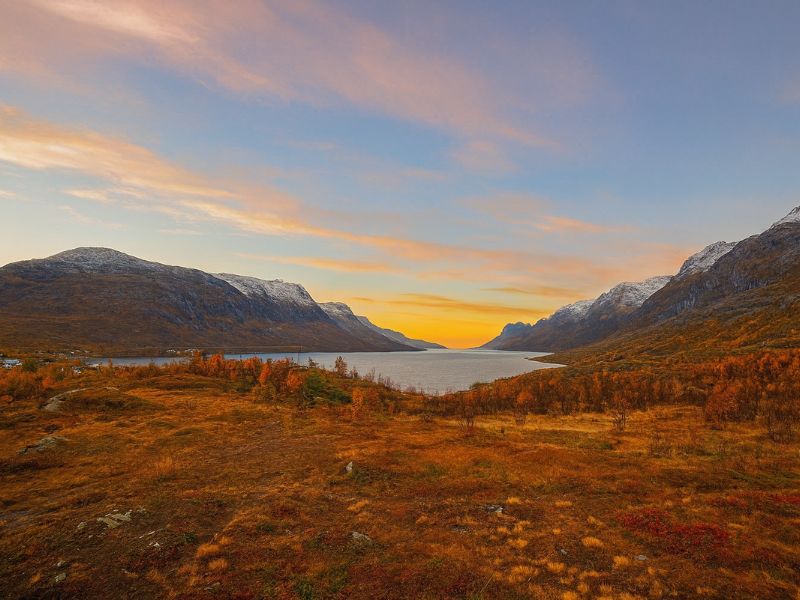
September-October shoulder season offers moderate crowds, 20-30% lower prices than peak winter, and Northern Lights returning as darkness increases, though weather becomes highly unpredictable.
March-April spring transition provides extending daylight, some Northern Lights possibility early March, and beginning of spring skiing, but suffers from worst weather unpredictability of the year.
Shoulder seasons appeal to budget travelers accepting weather uncertainty and limited phenomenon visibility in exchange for significant cost savings and fewer tourists.
Table: Shoulder Seasons Detailed Assessment
| Period | Pros | Cons | Best For | Avoid If | Pricing vs Peak | Activities Available |
|---|---|---|---|---|---|---|
| September | Low crowds, cheaper, aurora returning, autumn colors | Unpredictable weather, shorter darkness, weaker aurora | Budget travelers, autumn lovers | Northern Lights priority | -25% vs winter | Hiking still, early aurora |
| October | Aurora season building, moderate crowds, fall colors | Weather deteriorating, some snow, variable conditions | Flexible schedules | Guaranteed good weather needed | -20% vs winter | Late hiking, growing aurora chances |
| March | Sun returning, extended twilight, spring skiing | Aurora season ending, worst weather, slushy snow | Spring lovers, skiers | Northern Lights focus | -15% vs peak winter | Late aurora, spring activities |
| April | More daylight, improving weather slowly | No aurora (too light), snow blocks trails, awkward transition | Nobody really | Any specific interest | -30% vs winter | Limited – worst month overall |
September provides decent hiking conditions early month before snow arrives, combined with growing darkness enabling Northern Lights viewing from mid-month onward.
October sees autumn colors peak across birch forests creating golden landscapes, while darkness increases enabling better Northern Lights viewing than September.
The September-October aurora success rate reaches only 40-55% over 3-4 nights versus 70-80% peak winter, making it risky for one-time Northern Lights seekers.
March extends daylight rapidly with sun returning after polar night, creating beautiful extended twilight conditions but reducing Northern Lights viewing windows.
April represents the absolute worst time to visit Tromsø with aurora season ended, insufficient darkness for proper viewing, snow still blocking trails, and highly unstable weather.
Shoulder season weather swings wildly with temperatures fluctuating -5°C to +10°C (23-50°F) and precipitation switching between rain and snow unpredictably.
The pricing advantage of shoulder seasons saves €20-40 nightly on accommodation and 15-25% on tours, appealing to budget travelers with flexible expectations.
Tour operators reduce schedules during shoulder seasons with fewer Northern Lights tours departing and some activity providers closing entirely April and September-October.
Most travelers should avoid shoulder seasons unless budget constraints force it or they specifically want autumn colors (September-October) accepting weather uncertainty.
How Do Polar Night and Midnight Sun Affect Visit Timing?
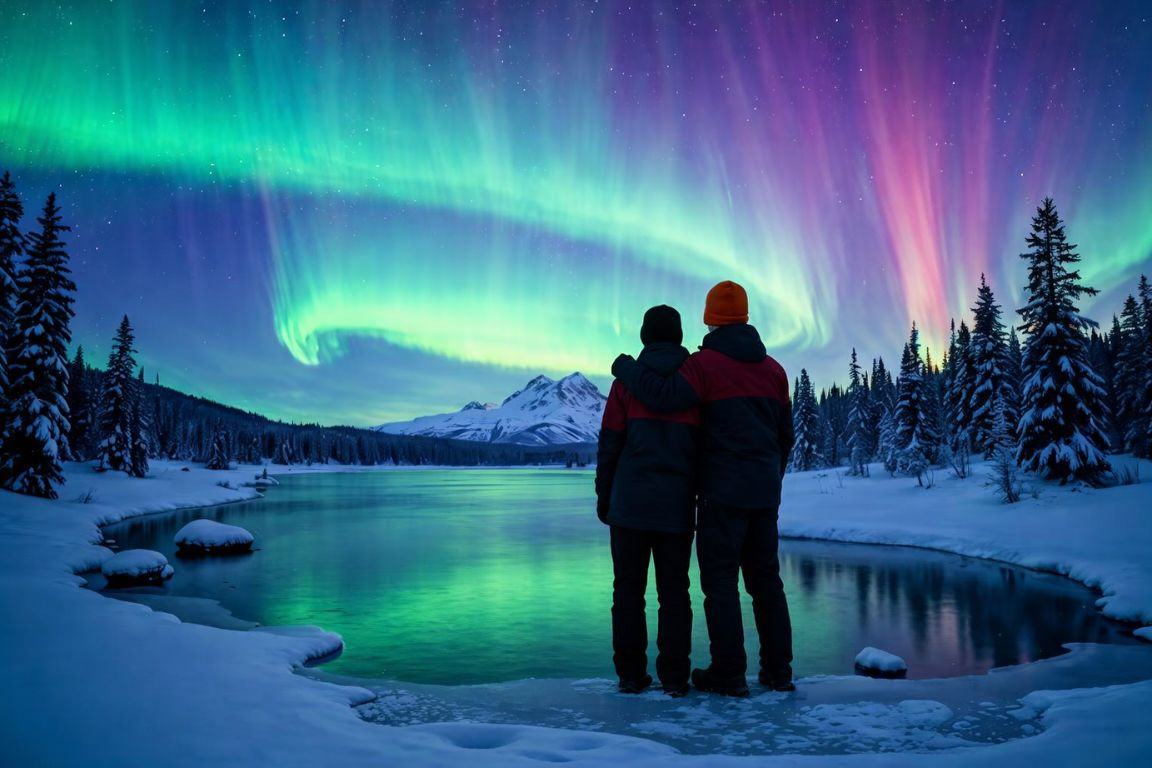
Polar night November 21 through January 21 creates perpetual twilight and darkness with the sun never rising, defining Tromsø’s winter identity and enabling optimal Northern Lights viewing.
Midnight sun May 20 through July 22 brings continuous daylight with the sun circling the horizon never setting, creating surreal conditions enabling 24-hour outdoor activities.
These extreme phenomena result from Tromsø’s 69°N latitude above the Arctic Circle where Earth’s axial tilt produces dramatic seasonal light variation.
Table: Light Conditions Throughout the Year in Tromsø
| Period | Dates | Sun Behavior | Hours of Light | Sky Conditions | Photography | Activities Possible | Sleep Difficulty |
|---|---|---|---|---|---|---|---|
| Polar Night | Nov 21 – Jan 21 | Never rises | 0-3 hrs deep twilight | Blue twilight midday, pitch dark | Best aurora, blue hour | Aurora hunting, winter sports | Low (naturally dark) |
| Deep Winter | Oct 15 – Nov 20, Jan 22 – Feb 15 | Brief appearance | 3-6 hours | Short daylight window | Good aurora + some day shots | Limited day activities | Low |
| Spring Transition | Feb 16 – Apr 30 | Rapid increase | 6-18 hours | Growing daylight | Extended twilight | More day activities | Medium |
| Midnight Sun | May 20 – Jul 22 | Never sets | 24 hours | Continuous sun | Golden hour always | Unlimited timing | Very High |
| Bright Summer | Apr 15 – May 19, Jul 23 – Aug 25 | Very long days | 18-24 hours | Extensive twilight | Long shooting windows | Extended activities | High |
| Autumn Fade | Aug 26 – Oct 14 | Rapid decrease | 12-18 hours | Shortening days | Autumn colors | Normal day activities | Medium |
Polar night doesn’t mean complete 24-hour darkness with 2-3 hours of deep blue twilight around midday providing enough illumination for walking and outdoor activities.
The polar night blue hour creates surreal atmospheric conditions with snow-covered landscapes bathed in perpetual twilight, offering unique photography opportunities impossible elsewhere.
Midnight sun enables hiking at 2am, fishing at midnight, or kayaking at 11pm with full daylight, though many visitors struggle adjusting to sleeping during continuous light.
The dramatic light transitions affect circadian rhythms and mood, with some visitors experiencing mild depression during polar night or insomnia during midnight sun.
Vitamin D deficiency concerns during polar night lead Tromsø residents to use supplements and light therapy, though short-term visitors rarely experience significant effects.
Midnight sun visitors require blackout curtains and sleep masks for adequate rest, with many hotels providing these specifically for summer guests.
The phenomena timing is fixed annually with polar night and midnight sun occurring same dates every year due to Earth’s predictable axial tilt and orbit.
Experiencing both phenomena requires two separate visits six months apart, with most travelers choosing one based on whether Northern Lights or midnight sun holds more appeal.
Photography enthusiasts debate which phenomenon offers better opportunities – polar night’s aurora and twilight versus midnight sun’s endless golden hour each having passionate advocates.
What Weather Patterns Should You Expect Each Season?
Winter November-March brings stable cold temperatures -4°C to -10°C (15-25°F) with frequent snow, though Arctic maritime climate creates less extreme cold than interior Scandinavia.
Summer June-August delivers mild temperatures 10-15°C (50-59°F) with June-July being driest months, though even summer requires rain gear for unpredictable Arctic weather.
Shoulder seasons September-October and March-April suffer the most unstable weather with temperatures swinging wildly and precipitation alternating between rain and snow.
Check your travel date before arranging other plans. The four-hour husky outing includes kennel transfers, an Arctic suit and winter boots. Check Kvaløya Husky Dates
Table: Weather Patterns by Season in Tromsø
| Season | Temperature Range | Precipitation | Snow Cover | Wind | Cloud Cover | Clothing Needed | Weather Stability |
|---|---|---|---|---|---|---|---|
| Winter (Nov-Feb) | -10°C to -4°C (15-25°F) | 10-15 days/month snow | Complete | Moderate | 60-70% cloudy | Extreme cold gear | Moderate (cold but stable) |
| Spring (Mar-May) | -2°C to 8°C (28-46°F) | 12-18 days/month rain/snow | Decreasing | Moderate-High | 65-75% cloudy | Layers, waterproof | Poor (highly variable) |
| Summer (Jun-Aug) | 8°C to 15°C (46-59°F) | 8-12 days/month rain | None | Low-Moderate | 50-60% cloudy | Light layers, rain jacket | Good (most stable) |
| Autumn (Sep-Oct) | 2°C to 10°C (36-50°F) | 12-16 days/month rain | None to partial | Moderate-High | 65-75% cloudy | Layers, waterproof | Poor (deteriorating) |
Winter cold feels more manageable than expected due to dry Arctic air and lack of humidity, with -10°C (14°F) in Tromsø feeling less harsh than 0°C (32°F) in humid climates.
Windchill significantly impacts winter comfort with moderate winds making -10°C feel like -20°C (-5°F to -15°F), requiring windproof outer layers for all outdoor activities.
Summer temperatures rarely exceed 18-20°C (64-68°F) with most days reaching 12-15°C (54-59°F), requiring visitors to adjust expectations from typical summer vacation warmth.
The midnight sun summer creates little temperature variation between day and night with 24-hour sunlight maintaining consistent 10-15°C (50-59°F) conditions.
Rain occurs year-round averaging 10-15 days monthly, though winter precipitation falls as snow while summer brings liquid rain requiring waterproof gear.
Cloud cover affects Northern Lights viewing significantly with winter averaging 60-70% cloudy skies, making 3-4 night stays necessary to catch clear conditions.
Fog rarely affects Tromsø due to Arctic location and maritime climate, keeping visibility generally good except during specific weather systems.
Extreme weather events including blizzards, severe cold (-20°C/-4°F), or heavy rain occasionally impact travel but remain relatively rare compared to more extreme Arctic locations.
The coastal location moderates temperature extremes versus interior Norway, with Tromsø rarely experiencing below -20°C (-4°F) or above 25°C (77°F) conditions.
Discover the Lyngen Alps by shared snowmobile with bus and ferry transfers, warm gear, helmet, soup and hot drinks included in the eight-hour outing. Explore The Lyngen Snowmobile Safari
How Do Crowds and Prices Vary by Season?
December through February sees absolute peak crowds and highest prices with accommodation costing €120-200 nightly and Northern Lights tours filling weeks in advance.
June through July delivers second-highest tourist volumes and prices at €100-180 accommodation as Norwegian summer holidays and international visitors converge.
Shoulder seasons September-October and March-April offer 20-30% lower prices and moderate crowds, though April specifically sees minimal tourism due to poor conditions.
For exact price breakdowns of accommodation, meals, activities, and transport, see our comprehensive guide on Tromsø’s costs with budget comparison by spending level.
Table: Crowds and Pricing by Month
| Month | Tourist Crowds | Accommodation Prices | Tour Prices | Booking Timeline | Flight Costs | Overall Expense Level |
|---|---|---|---|---|---|---|
| January | Very High | €140-200 | Standard-High | 4-6 months | High | Highest |
| February | Very High | €140-200 | Standard-High | 4-6 months | High | Highest |
| March | High | €120-180 | Standard | 3-4 months | Medium-High | High |
| April | Low | €80-120 | Low (limited) | 2-3 weeks | Medium | Low |
| May | Medium | €100-150 | Standard | 2-3 months | Medium | Medium |
| June | High | €120-180 | Standard-High | 2-3 months | Medium-High | High |
| July | High | €120-180 | Standard-High | 2-3 months | High | High |
| August | Medium-High | €100-160 | Standard | 1-2 months | Medium-High | Medium-High |
| September | Low-Medium | €80-140 | Standard-Low | 2-4 weeks | Medium | Medium |
| October | Medium | €100-150 | Standard | 2-3 months | Medium | Medium |
| November | High | €120-180 | Standard-High | 3-4 months | Medium-High | High |
| December | Very High | €140-200+ | High | 4-6 months | High | Highest |
Christmas and New Year’s weeks (December 20-January 5) see prices spike 40-50% above normal winter rates with accommodation reaching €200-300 nightly.
Easter week (March-April depending on year) creates brief price and crowd surge within otherwise moderate spring period, requiring 2-3 months advance booking.
July represents absolute peak summer crowds with Norwegian schools closed and peak international tourism converging, filling hiking trails and tour buses.
September offers the best value with autumn colors, returning Northern Lights, 25-30% lower prices than peak winter, and dramatically fewer tourists.
The booking timeline matters enormously with peak winter (December-February) requiring 3-6 months advance reservation for any decent accommodation options.
Last-minute deals occasionally appear 1-2 weeks before travel during shoulder seasons when operators need to fill capacity, though risky strategy for accommodation.
Package deals bundling accommodation and tours sometimes offer 10-20% savings versus booking separately, worth comparing during any season.
Flight costs to Tromsø via Oslo vary seasonally with December-February and July commanding highest fares, May and September-October offering better deals.
Budget travelers specifically targeting low prices should focus on April (lowest prices but terrible conditions) or September (excellent value with decent conditions).
Choose a departure that fits your dates; natural conditions remain uncertain. The 5–8-hour aurora hunt includes a warm meal, thermal suit and web-size photos. Explore Aurora Hunt With Meal And Photos
What Activities Are Available Each Season?
Winter activities including dog sledding, snowmobiling, Northern Lights tours, and whale watching (November-January only) define the cold-weather Tromsø experience.
Summer enables hiking extensive trail networks, midnight sun tours, fishing, kayaking, and fjord cruises impossible during winter when snow and ice block access.
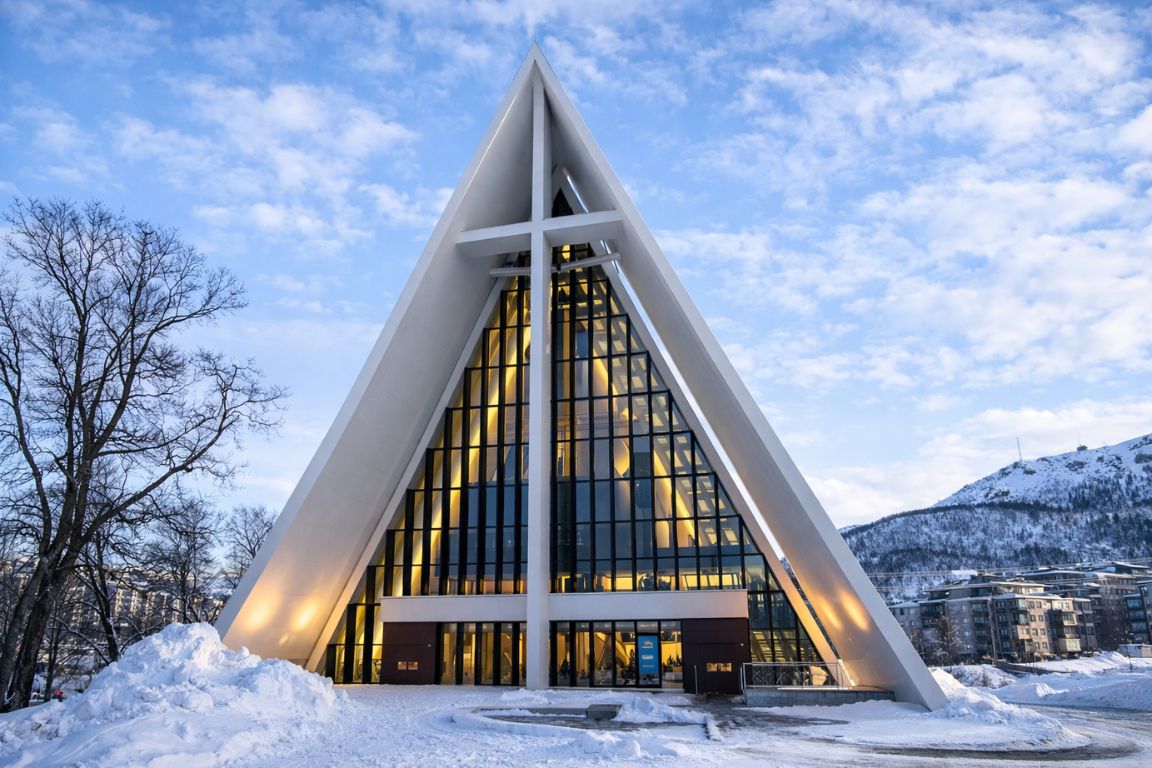
Year-round activities including Arctic Cathedral visits, Polaria aquarium, cable car to Fjellheisen, and city exploration work regardless of season with adjusted hours.
Our complete guide to budget-friendly activities in Tromsø covers free experiences (Arctic Cathedral exterior, downtown walks, beaches), cheap dining options, and saving 50-70% through smart planning.
Table: Activity Availability and Optimal Timing by Month
| Activity | Jan | Feb | Mar | Apr | May | Jun | Jul | Aug | Sep | Oct | Nov | Dec | Optimal Months |
|---|---|---|---|---|---|---|---|---|---|---|---|---|---|
| Northern Lights Tours | ✓✓✓ | ✓✓✓ | ✓✓ | – | – | – | – | – | ✓ | ✓✓ | ✓✓✓ | ✓✓✓ | Nov-Feb |
| Dog Sledding | ✓✓✓ | ✓✓✓ | ✓✓✓ | ✓ | – | – | – | – | – | – | ✓ | ✓✓✓ | Dec-Mar |
| Snowmobiling | ✓✓✓ | ✓✓✓ | ✓✓✓ | ✓ | – | – | – | – | – | – | ✓ | ✓✓✓ | Dec-Mar |
| Whale Watching | ✓✓✓ | – | – | – | – | – | – | – | – | – | ✓✓✓ | ✓✓✓ | Nov-Jan only |
| Skiing (Cross-Country) | ✓✓✓ | ✓✓✓ | ✓✓✓ | ✓ | – | – | – | – | – | – | ✓ | ✓✓✓ | Jan-Mar |
| Hiking (Full Access) | – | – | – | – | ✓ | ✓✓✓ | ✓✓✓ | ✓✓✓ | ✓✓ | ✓ | – | – | Jun-Aug |
| Midnight Sun Tours | – | – | – | ✓ | ✓✓ | ✓✓✓ | ✓✓✓ | ✓✓ | – | – | – | – | Jun-Jul |
| Fishing | ✓ | ✓ | ✓ | ✓ | ✓✓ | ✓✓✓ | ✓✓✓ | ✓✓✓ | ✓✓ | ✓ | ✓ | ✓ | Jun-Aug |
| Kayaking/Fjord Cruises | – | – | – | – | ✓✓ | ✓✓✓ | ✓✓✓ | ✓✓✓ | ✓✓ | – | – | – | Jun-Aug |
| Cable Car/City Tours | ✓✓ | ✓✓ | ✓✓ | ✓✓ | ✓✓✓ | ✓✓✓ | ✓✓✓ | ✓✓✓ | ✓✓ | ✓✓ | ✓✓ | ✓✓ | Year-round |
✓✓✓ = Optimal conditions, ✓✓ = Good conditions, ✓ = Available but limited, – = Not available/not recommended
Dog sledding operates November-April with peak conditions December-March when deep snow covers trails, though shorter seasons exist at higher elevations.
Whale watching specifically runs November-January when orcas and humpback whales follow herring into Tromsø fjords, making this three-month window the only viable period.
Hiking trail access is severely limited October-May with snow and ice covering most routes, requiring winter skills and equipment for any mountain exploration.
Midnight sun tours operate May-August with peak conditions June-July, including late-night boat trips, evening mountain hikes, and photography expeditions under 24-hour daylight.
Fishing is technically year-round with ice fishing in winter and shore/boat fishing in summer, though summer provides best conditions and variety.
Cross-country skiing uses groomed trails around Tromsø from December-April with peak snow conditions January-March before spring melt begins.
The activity overlap is minimal between seasons with winter and summer offering almost entirely different experiences requiring separate visits to enjoy full activity range.
Tour operators reduce winter activity schedules during polar night’s darkness, with some experiences like hiking tours shutting down entirely November-February.
What Special Events and Festivals Affect Visit Timing?
Tromsø International Film Festival in mid-January draws cinema enthusiasts worldwide with Arctic-themed films and midnight sun programming creating cultural atmosphere.
Northern Lights Festival in late January celebrates classical music across multiple venues, combining aurora hunting with concert attendance for cultural visitors.
Midnight Sun Marathon in mid-June offers unique racing experience running under 24-hour daylight, attracting runners globally for distinctive Arctic competition.
Check your travel date before arranging other plans. The 5–8-hour aurora hunt includes a warm meal, thermal suit and web-size photos. Check Your Tromsø Aurora Date
Table: Major Events and Festivals Worth Timing Visits Around
| Event | Dates | What It Offers | Crowd Impact | Price Impact | Worth Planning Around? |
|---|---|---|---|---|---|
| Tromsø International Film Festival | Mid-January (Jan 13-19, 2026) | Arctic cinema, cultural events | Moderate increase | +10-15% accommodation | Film buffs yes, others neutral |
| Northern Lights Festival | Late January (Jan 29-Feb 2, 2026) | Classical music concerts | Moderate increase | +10-15% accommodation | Music lovers yes |
| Sami Week | Early February (Feb 5-9, 2026) | Indigenous culture, reindeer racing | Slight increase | +5-10% | Cultural interest yes |
| Midnight Sun Marathon | Mid-June (Jun 20, 2026) | Run under midnight sun | High increase | +20-30% accommodation | Runners definitely, others no |
| Bukta Festival | Mid-July (Jul 16-19, 2026) | Music festival, outdoor concerts | Very High increase | +30-40% accommodation | Music fans yes, others avoid |
| Christmas Markets | Late November-December | Traditional markets, festive atmosphere | Very High increase | +40-50% accommodation | Christmas lovers yes |
Sami Week in early February celebrates indigenous Sami culture with reindeer racing, traditional crafts, and cultural programs providing authentic Arctic indigenous experiences.
Bukta Music Festival in mid-July brings major Norwegian and international acts to outdoor venues, creating peak crowds and accommodation scarcity.
Christmas markets during late November-December offer traditional Norwegian holiday shopping and festive atmosphere, combining with Northern Lights season.
Major events require 4-6 months advance accommodation booking as limited Tromsø hotel capacity fills rapidly, with some requiring year-ahead planning.
Film and music festivals create cultural alternatives to outdoor activities, appealing to visitors wanting winter Tromsø experiences beyond Northern Lights hunting.
The midnight sun marathon timing coincides with optimal summer conditions, making it attractive for runners wanting Arctic racing experiences during peak season.
Most travelers can ignore festival timing unless specifically interested, with events creating minor accommodation challenges rather than major obstacles.
Easter week creates brief tourist surge in March-April as Norwegian families vacation, requiring 2-3 months advance booking despite otherwise quiet period.
FAQs
Check your travel date before arranging other plans. The 5–8-hour aurora hunt includes a warm meal, thermal suit and web-size photos. Check Your Tromsø Aurora Date
What is the best month to visit Tromsø?
December-January for Northern Lights with maximum darkness and peak aurora activity (check aurora hunt dates), or June-July for midnight sun with warmest weather and full hiking access, depending on your priorities.
Choose a departure that fits your dates; natural conditions remain uncertain. The 2½-hour city walk combines local history with included Polar Museum admission. Explore Tromsø City Walk And Polar Museum
When can you see Northern Lights in Tromsø?
October through March with peak viewing November-February during maximum darkness, achieving 60-80% success rates over 3-4 nights versus 40-50% during shoulder months.
Check the big-bus chase on your actual travel date before arranging other plans, especially the following morning; the listed return window can extend to 03:00. Check The Big Bus Chase
What is polar night in Tromsø?
November 21 through January 21 when the sun never rises above the horizon at 69°N, creating perpetual twilight and complete darkness ideal for Northern Lights viewing.
Discover what fits this part of your trip. The 5–8-hour aurora hunt includes a warm meal, thermal suit and web-size photos. Explore Aurora Hunt With Meal And Photos
When is midnight sun in Tromsø?
May 20 through July 22 when the sun never sets, circling the horizon 24 hours daily enabling continuous outdoor activities under endless daylight.
Check your date before arranging other plans. Explore Sommarøy and fjord scenery by coach with a salmon picnic, coffee or tea and professional photos. The 4½–5-hour experience is a road trip, not a cruise. Explore The Sommarøy Road Trip
What is the worst time to visit Tromsø?
April with aurora season ended, insufficient darkness for proper viewing, snow still blocking hiking trails, and highly unstable unpredictable weather.
Is Tromsø worth visiting in summer?
Yes, absolutely – midnight sun phenomenon, hiking, warmest weather 10-15°C (50-59°F), and dramatic landscapes offer completely different but equally spectacular Arctic experience.
Check your travel date before arranging other plans. The Sommarøy road trip includes a salmon picnic and professional photos. Check Your Sommarøy Tour Date
How to Choose Your Perfect Tromsø Visit Timing
Pick the want that matches your trip, and see the one tour built around it.
Prioritize your primary interest whether Northern Lights (requires October-March darkness) or midnight sun (requires May-August continuous daylight) as these phenomena cannot compromise.
Consider tolerance for cold with winter requiring extreme cold weather gear for -10°C to -15°C (5-15°F) versus summer’s mild 10-15°C (50-59°F) needing only light layers.
Assess activity priorities whether dog sledding and snowmobiling (winter only) or hiking and fjord activities (summer only) with minimal seasonal overlap.
Evaluate budget flexibility with peak winter (December-February) and summer (June-July) costing 30-50% more than shoulder seasons September-October or March.
Check availability for your preferred dates booking 3-6 months ahead for winter peak season or 2-3 months for summer ensuring accommodation options.
Plan minimum 3-4 nights for Northern Lights success accounting for weather variability versus 4-5 days summer exploration maximizing hiking opportunities.
Accept that experiencing both Northern Lights and midnight sun requires two separate visits six months apart, making repeat Tromsø trips common for serious Arctic enthusiasts.
Review activity calendars ensuring key experiences like whale watching (November-January only) or specific festivals align with your travel dates.
For complete seasonal planning and expert guidance on optimal timing, visit Tromso Norway Tours where we maximize your Arctic experience.
Glossary
- Polar Night: November 21-January 21 period when sun never rises above horizon creating perpetual twilight and darkness.
- Midnight Sun: May 20-July 22 period when sun never sets, circling sky 24 hours enabling continuous daylight activities.
- Aurora Oval: Ring-shaped zone around magnetic poles where Northern Lights occur, with Tromsø positioned directly beneath.
- KP Index: 0-9 scale measuring geomagnetic activity predicting aurora strength, with KP 3+ visible in Tromsø during darkness.
- Shoulder Season: Transitional periods September-October and March-April between peak seasons with moderate crowds and lower prices.
Check your travel date before arranging other plans. The 5–8-hour aurora hunt includes a warm meal, thermal suit and web-size photos. Check Your Tromsø Aurora Date
Key Takeaways
- Best time to visit Tromsø depends on priorities: winter (November-February) for Northern Lights with 60-80% success over 3-4 nights, or summer (June-July) for midnight sun with 24-hour daylight and hiking.
- Northern Lights season October-March with peak November-February during maximum darkness (0-6 hours daylight).
- Polar night November 21-January 21 means sun never rises creating perpetual twilight perfect for aurora viewing. Winter temperatures -4°C to -10°C (15-25°F), summer 10-15°C (50-59°F).
- December-February highest crowds and prices (€120-200 accommodation) during peak Northern Lights season. Midnight sun May 20-July 22 provides continuous daylight enabling unlimited activity timing.
- June-July warmest driest months with full hiking trail access.
- Shoulder seasons September-October and March-April offer 20-30% lower prices, moderate crowds, though unpredictable weather. April worst month with aurora ended, trails closed, insufficient darkness, unstable weather. Book 3-6 months ahead winter peak, 2-3 months summer.
- Whale watching November-January only when orcas/humpbacks feed in fjords. Activities dramatically differ: dog sledding, snowmobiling, Northern Lights tours winter; hiking, midnight sun tours, fishing summer. January coldest month -10°C to -15°C (5-15°F). February best balance with sun returning but excellent aurora still. Christmas/New Year prices spike 40-50% above normal. Midnight sun disrupts sleep requiring blackout curtains, sleep masks.
- Success rates: 70-80% Northern Lights November-February, 40-50% shoulder seasons. Polar night creates 24-hour darkness with 2-3 hours blue twilight midday.
- July peak crowds with Norwegian summer holidays. September excellent value with 25-30% savings, autumn colors, returning aurora.
- Experience both phenomena requires two visits six months apart. Plan complete seasonal Tromsø at /.
Written by Erik Johansen, Tromsø tour guide for the past 15 years, specializing in Northern Lights expeditions and seasonal Arctic experiences.
Check Your Tour Date
Planning an aurora evening? Check your Tromsø date before arranging dinner or other plans; this guided hunt includes a warm meal, thermal suit and web-size souvenir photos.
Adjust activity, timing or group needs
General recommendations: confirm dates and group requirements
For a free or independent visit, explore central Tromsø on foot, check current daylight and weather conditions, and use established public viewpoints where access is safe. Treat aurora viewing as weather-dependent, avoid unfamiliar winter terrain without suitable skills and equipment, and choose summer hikes according to current trail conditions rather than the calendar alone.
Compare Your Group’s Real Costs
Use current quotes in the same currency. Include transport, fuel, parking and equipment in your DIY total. Include all participants and extras in the tour total.
Booking takes place with the provider. Prices, exact departures and available options are shown there. We may earn a commission when you book through these links.