Snowmobile Tours in Tromsø: Complete What to Expect Guide 2026-2027
Tromsø snowmobile guide: €180-350 (1-2 hrs actual riding), 30-60 km/h through mountains. License required 18+. Thermal suits included. Northern Lights combo €280-400.
Last updated: August 31, 2026
TL;DR
Snowmobile tours in Tromsø cost €180-350 per person for 2-4 hour experiences including 1-2 hours actual riding through Arctic wilderness. Tours operate November-April with peak December-February. Two-person snowmobiles (2-up riding) are standard with adults alternating driving every 30-45 minutes, though single snowmobiles cost €50-100 extra per person. Minimum age 18+ for solo drivers with valid driver’s license required, 12-16+ as passengers depending on operator. Physical demand is moderate with sitting/steering requiring less exertion than dog sledding though cold exposure and vibration creating fatigue. Expect speeds 30-60 km/h through mountains, frozen lakes, and valleys with stops for photos and driver switching. What’s included: transport from hotels, thermal suits, helmets, instruction, snowmobile rental, fuel, guide. Not included: personal winter base layers, gloves often, insurance excess €1,000-3,000 if damage occurs. Tours visit locations 30-60km from Tromsø including Kvaløya mountains, Breivikeidet areas, and Lyngen Alps. Safety concerns include cold exposure (windchill makes -15°C feel like -30°C), collision risks from inexperience, and getting stuck requiring group assistance. Evening Northern Lights combo tours €280-400 pair snowmobiling with aurora hunting. Weather challenges include poor visibility during snow, extreme cold below -25°C causing cancellations, and wet snow conditions.
8 hours for lyngen alps snowmobile safari. Book The Lyngen Snowmobile Safari
Discover what fits this part of your trip. The eight-hour Lyngen snowmobile day includes transfers, warm gear and a soup meal. Explore Lyngen Alps Snowmobile Safari
What Actually Happens on a Snowmobile Tour?
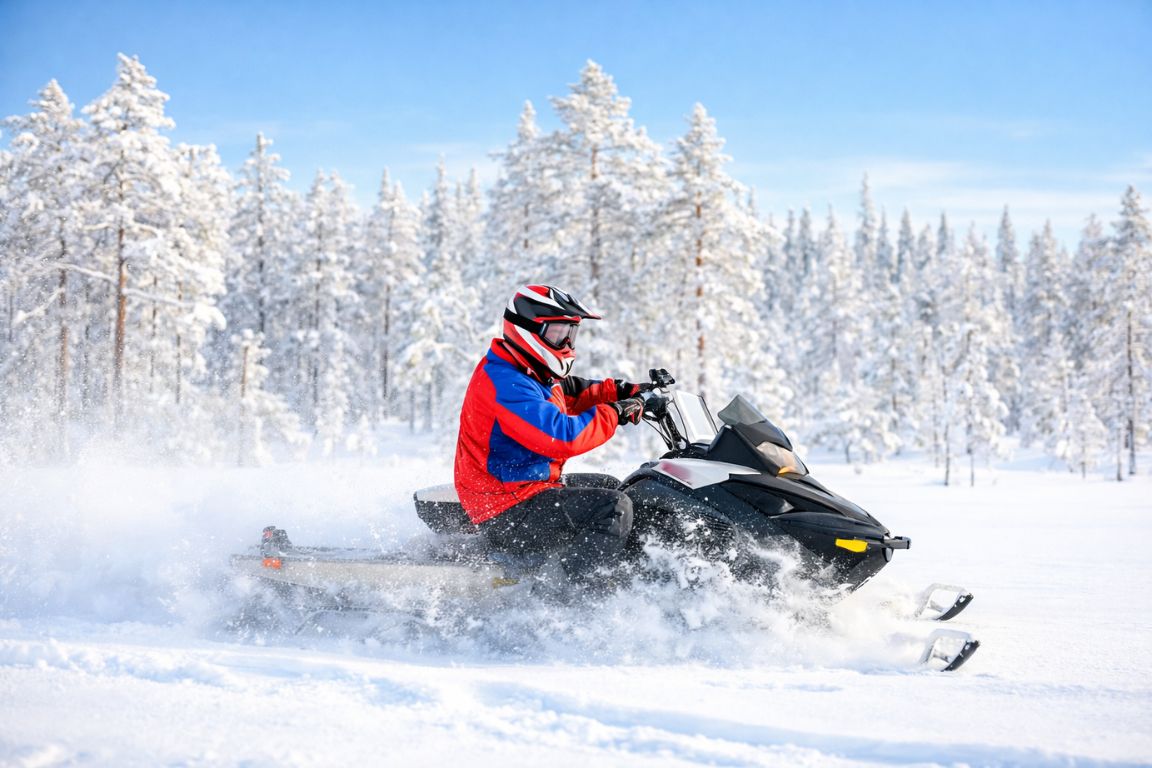
Hotel pickup collects participants 9-10am (morning tours) or 1-2pm (afternoon tours) via minibus driving 30-60 minutes to snowmobile bases located in mountain areas with reliable snow.
Arrival begins with thermal suit fitting and safety briefing (20-30 minutes) covering snowmobile operation, hand signals, trail rules, emergency procedures, and two-person riding protocols.
Practice session allows 10-15 minutes learning throttle control, brake application, and steering basics on flat terrain before departing on actual tour routes.
Snowmobile safari lasts 1-2 hours riding single-file through wilderness with photo stops every 20-30 minutes and driver/passenger switching at midpoint for two-person machines.
This 8-hour safari combines bus and ferry transfers, warm gear, a helmet, guided shared riding, soup and hot drinks. Check your travel date before arranging later activities. Check The Lyngen Safari Date
Table: Complete Snowmobile Tour Timeline Breakdown
| Time | Activity | Duration | What Happens | Your Role | Energy Level | Difficulty | What to Expect |
|---|---|---|---|---|---|---|---|
| 0:00-0:40 | Hotel pickup, drive to base | 30-60 min | Minibus transport, meet group | Sit, relax | Low | Easy | Scenic mountain drive |
| 0:40-1:00 | Arrival, thermal suit fitting | 15-20 min | Gear sizing, bathroom | Get dressed | Low | Easy | Bulky suits, multiple layers |
| 1:00-1:30 | Safety briefing, instruction | 20-30 min | Controls, rules, signals explained | Listen, ask questions | Low | Easy | Critical attention needed |
| 1:30-1:45 | Practice session on flat area | 10-15 min | Learn throttle, brake, steering | Drive slowly | Medium | Medium | Nervous but controlled |
| 1:45-2:45 | Actual snowmobile safari | 60-90 min | Ride through wilderness | Drive or passenger | High | Medium-High | Cold, thrilling, bumpy |
| 2:15 | Photo stop, driver switch | 10 min | Take photos, switch positions | Change drivers midpoint | Medium | Easy | Stretch, warm hands |
| 2:45-3:00 | Return to base, gear return | 10-15 min | Park machines, remove suits | Organize belongings | Medium | Easy | Tired, cold, exhilarated |
| 3:00-3:15 | Hot drinks, warm-up | 10-15 min | Coffee, tea, snacks indoors | Relax, socialize | Low | Easy | Welcome warmth |
| 3:15-4:00 | Transport back to hotels | 30-60 min | Drive back to city | Rest, process experience | Low | Easy | Tired, satisfied |
The hotel pickup timing affects experience with morning tours (9-10am) seeing fewer participants and better light for photos versus afternoon tours (1-2pm) being busier.
Thermal suit distribution provides oversized insulated coveralls though not including gloves or neck warmers at most operators, requiring bringing own accessories.
Safety briefing covers critical information including thumb throttle operation (twist right handlebar), brake lever (squeeze left handlebar), emergency engine cutoff (red button), and two-person weight distribution.
Practice session importance cannot be overstated with 10-15 minutes determining whether participants feel comfortable enough to continue or need to opt out as passengers.
The actual riding 60-90 minutes represents only 30-40% of total tour time (3-4 hours) with remaining being transport, preparation, and breaks similar to dog sledding time proportions.
Photo stops every 20-30 minutes allow warming cold hands, taking pictures, and checking group status with stragglers or anyone experiencing difficulties.
Driver switching protocol at midpoint enables both partners (on two-person machines) experiencing control, with first half rider becoming second half passenger.
Post-ride exhaustion surprises many despite sitting position, with cold exposure, vibration, concentration, and adrenaline creating more fatigue than anticipated.
The group dynamics show tours typically including 6-14 participants (3-7 snowmobiles) creating manageable convoy sizes for guides maintaining visual contact throughout.
What Are the Different Tour Types and Costs?
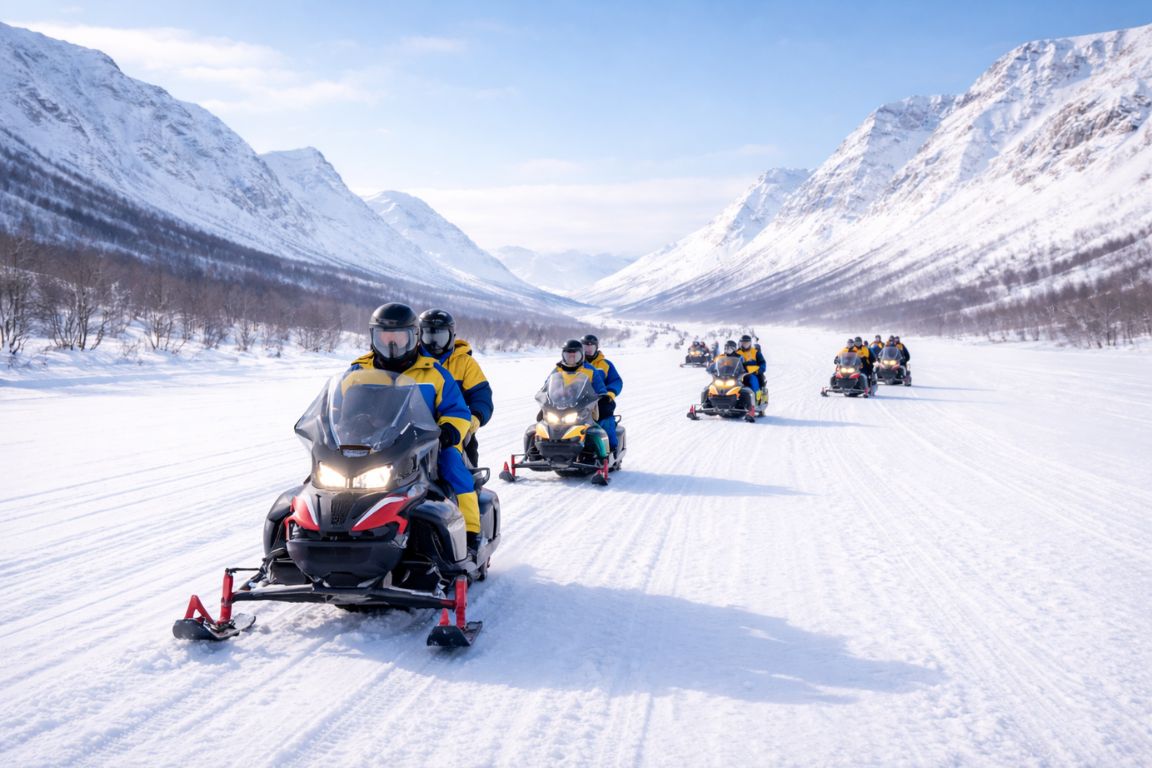
Short tours (2-3 hours total, 60 minutes riding) cost €180-230 providing introduction to snowmobiling suiting time-limited visitors or nervous first-timers testing interest.
Standard tours (3-4 hours total, 90 minutes riding) cost €250-300 representing most popular option balancing riding time with reasonable physical demands and pricing.
Extended tours (5-6 hours total, 2-3 hours riding) cost €350-450 offering serious wilderness immersion with lunch stops, longer distances, and comprehensive Arctic exploration.
Evening Northern Lights combination tours (4-5 hours) cost €280-400 pairing 60-90 minutes snowmobiling with aurora hunting though riding happening before dark limits pure snowmobiling time.
Only three snowmobile tours from Tromsø are real, bookable products rather than generic categories. Here is how they compare for the decision that actually matters: which one fits your night.
Prices above are the real per-person rate for that exact tour. The short/standard/extended figures in the table below describe the wider Tromsø snowmobile market, not these three specific listings.
Table: Snowmobile Tour Types Compared
| Tour Type | Total Duration | Actual Riding Time | Cost | Distance Covered | Best For | Included | Physical Demand | Booking Lead |
|---|---|---|---|---|---|---|---|---|
| Short Introduction | 2-3 hrs | 60 min | €180-230 | 20-30 km | Time-limited, nervous first-timers | Transport, basics | Medium | 1-2 weeks |
| Standard Half-Day | 3-4 hrs | 90 min | €250-300 | 40-60 km | Most visitors, best value | Transport, all gear, drinks | Medium-High | 2-4 weeks |
| Extended Full-Day | 5-6 hrs | 2-3 hrs | €350-450 | 80-120 km | Enthusiasts, serious experience | Transport, lunch, extended ride | High | 3-5 weeks |
| Evening Northern Lights | 4-5 hrs | 60-90 min | €280-400 | 30-50 km | Aurora priority, combo experience | Snowmobile + aurora hunting | Medium-High | 3-4 weeks |
| Private Group Tour | 3-4 hrs | 90-120 min | €1,200-2,000 total | 50-80 km | Groups 4-8, customized | Exclusive guide, flexibility | Medium-High | 4-6 weeks |
| Multi-Day Expedition | 2-5 days | 4-8 hrs daily | €1,200-3,500+ | 200-400+ km total | Adventure seekers, experienced | Camping, meals, extended wilderness | Very High | 2-3 months |
Short tour limitations include rushed feeling with minimal wilderness penetration and abbreviated riding time feeling teaser versus satisfying experience.
Standard tour value shows €250-300 for 90 minutes riding costing €2.80-3.30 per minute, expensive though providing unique Arctic access impossible by other means.
Extended full-day tours appeal to snowmobile enthusiasts wanting serious mountain exploration, reaching remote valleys and peaks inaccessible on shorter tours.
Northern Lights combination trade-off shows snowmobiling ending by 5-6pm before full darkness, then switching to heated minibus for separate aurora hunting portion.
Private tour advantages include custom pacing, route selection, ability to accommodate mixed ability groups, and flexibility adjusting plans based on conditions or preferences.
Two-person versus single snowmobile pricing shows sharing machines (€250-300 per person) versus solo riding costing €50-100 extra (€300-400 total) for guaranteed driver time.
Multi-day expedition requirements demand advanced snowmobile experience, winter camping tolerance, and high fitness with 4-8 hours daily riding creating significant physical challenges.
The best value calculation shows standard tours providing maximum experience per euro spent, with short tours feeling insufficient and extended tours being overkill for casual visitors.
Morning versus afternoon timing shows morning tours (9am) offering better light for photos and less crowded trails versus afternoon tours (1pm) being more convenient scheduling.
For detailed attraction descriptions, costs, optimal timing, restaurant recommendations, and sample itineraries, see our complete Tromsø guide on what to see and do.
How Do You Actually Drive a Snowmobile?
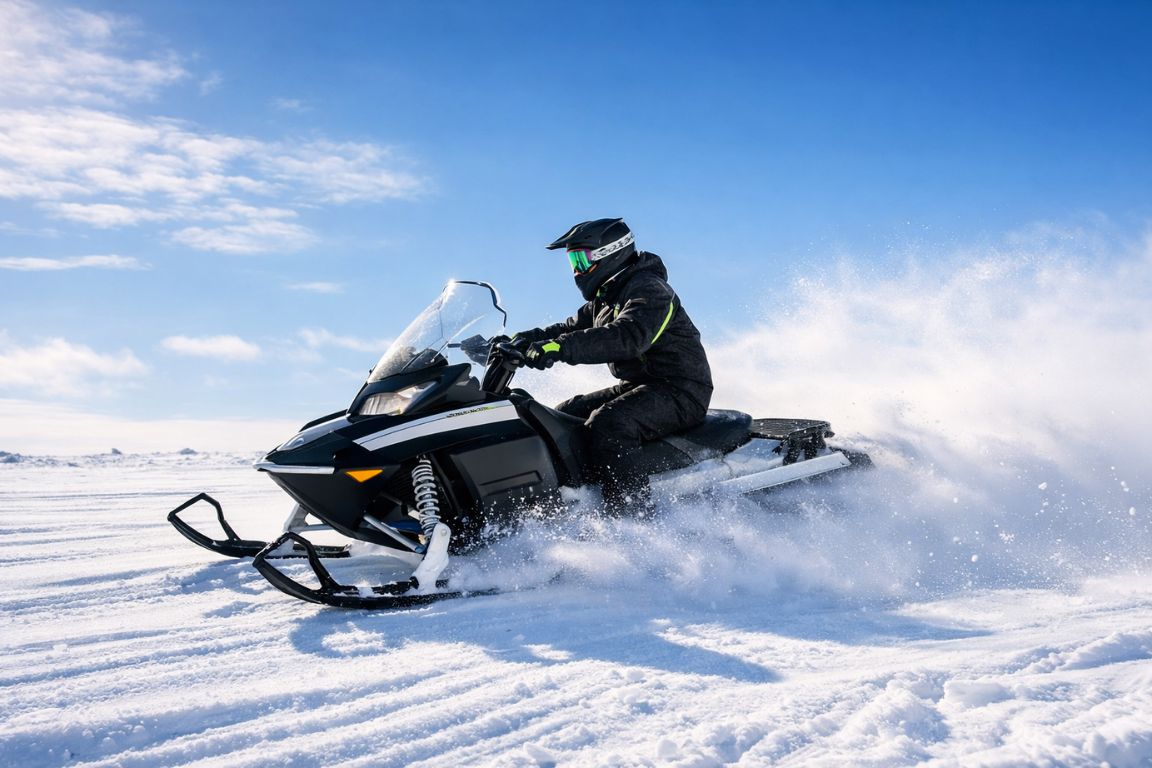
Thumb throttle on right handlebar twists down (press with thumb) to accelerate, releasing to decelerate, with digital speed display showing 30-60 km/h typical speeds.
Brake lever on left handlebar squeezes to slow or stop, engaging disc brakes on drive track with heavy pressure needed for quick stops on ice or downhill.
Steering operates like bicycle handlebars turning left/right though requiring body weight leaning into turns assisting machine direction changes at speed.
Two-person weight distribution places heavier person in front with lighter passenger behind, both leaning forward on straightaways and coordinating body positioning through turns.
Check your travel date before arranging other plans. The eight-hour Lyngen snowmobile day includes transfers, warm gear and a soup meal. Check Lyngen Snowmobile Safari Dates
Table: Snowmobile Control Mechanics and Operation
| Control Element | Location | How It Works | When to Use | Difficulty | Common Mistakes | Safety Notes |
|---|---|---|---|---|---|---|
| Thumb Throttle | Right handlebar grip | Press down with thumb to accelerate | Constant modulation | Easy-Medium | Too aggressive, jerky starts | Smooth gradual pressure |
| Brake Lever | Left handlebar | Squeeze to slow/stop | Before turns, downhill, stopping | Easy | Not braking enough ahead | Heavy pressure needed ice |
| Steering/Handlebars | Center front | Turn like bicycle | Corners, navigation | Medium | Not leaning body weight | Lean with machine on turns |
| Emergency Cutoff | Red button handlebar | Press to kill engine | Emergency only | Easy | Using unnecessarily | Restarts require pull start |
| Body Positioning | Your entire body | Lean forward straight, into turns | Throughout ride | Medium | Sitting back, stiff posture | Forward stance improves control |
| Weight Distribution (2-person) | Front/back balance | Heavier front, coordinate | Throughout | Medium | Unbalanced seating | Communicate before turns |
| Speed Modulation | Throttle control | Vary pressure for conditions | Varies by terrain | Medium | Constant full throttle | Adjust for visibility, terrain |
The thumb throttle sensitivity surprises beginners with light pressure creating rapid acceleration, requiring practice achieving smooth gradual speed increases versus jerky starts.
Brake effectiveness decreases on ice versus snow with heavy lever pressure needed achieving adequate stopping power, with beginners often underestimating stopping distances.
Body weight importance shows proper forward-leaning stance improving control while sitting back creating rear-heavy instability especially during acceleration.
Two-person coordination challenges include timing turns with both leaning same direction simultaneously, with miscommunication causing imbalance and control difficulties.
The speed capability shows snowmobiles reaching 60-80 km/h maximum though tour speeds limited 30-50 km/h for safety with inexperienced drivers in convoy formation.
Emergency cutoff button creates instant engine kill when pressed, used if driver falls off (tether-connected at some operators) or loses control requiring immediate stop.
Trail following protocol requires maintaining 20-30 meter spacing behind previous machine, following guide’s exact route avoiding off-trail riding where dangers (cliffs, thin ice) exist.
Hand signals from guides indicate stops (arm raised), turns (arm extended), speed adjustments (palm up/down), and hazards (pointing), requiring constant visual attention on lead guide.
The learning curve shows most participants achieving basic competence within first 15-20 minutes, with remaining time building confidence and refining technique.
Passing slower riders requires guide approval and safe straightaway sections, with unauthorized passing creating collision risks and group separation.
What Physical Demands and Requirements Exist?
Upper body strength in arms and shoulders handles handlebar control during 1-2 hour rides with vibration and steering forces creating fatigue despite motorized assistance.
Core strength maintains forward-leaning position and absorbs bumps without back strain, with weak cores leading to lower back pain by ride end.
Cold tolerance for extended exposure to -20°C windchill (from 30-50 km/h motion) proves more challenging than static Northern Lights viewing, requiring superior gear.
Weight restrictions show machines designed for combined loads 150-180kg (330-400 lbs) with heavier participants potentially requiring solo riding or specialized machines.
Table: Physical Requirements and Restrictions
| Physical Factor | Requirement Level | Why It Matters | Who Struggles | Adaptations Available | Restrictions | Age/License |
|---|---|---|---|---|---|---|
| Upper Body Strength | Medium | Control handlebar 1-2 hrs | Weak arms, arthritis | Shorter tours, breaks | None if can control | 18+ driver |
| Core Strength | Medium | Maintain position, absorb bumps | Back problems, weak core | Better suspension machines | Some back injuries disqualify | Self-assessment |
| Cold Tolerance | High | -20°C windchill extended | Cold-sensitive, thin | Better gear, shorter tours | Extreme sensitivity issues | All ages adequate gear |
| Balance/Coordination | Medium | Navigate turns, rough terrain | Poor coordination, elderly | Practice session assessment | Can opt passenger-only | 12-16+ passenger |
| Vision | Medium-High | See trail, follow guide | Poor eyesight, snow glare | Goggles, slower pace | Legally blind disqualified | Corrective lenses okay |
| Driver’s License | Required | Legal operation | Unlicensed individuals | Ride as passenger only | Must have valid license | Driver 18+, passenger varies |
| Weight | 150-180kg max combined | Machine capacity | Very heavy pairs | Single ride, weight distribution | Over limit may not fit | Operator dependent |
| Pregnancy | Prohibited | Vibration, fall risk | Pregnant women any trimester | None available | Complete prohibition | N/A |
The sitting position reduces leg strain compared to dog sledding’s standing requirement, though prolonged sitting (90-120 minutes) creates different discomfort from lack of position variety.
Arm fatigue accumulates from constant handlebar gripping combined with steering forces and vibration, with forearms and shoulders feeling burn by ride end.
Back strain affects participants with weak cores unable to maintain proper forward-leaning position, leading to slouching creating lower back pain during and after tours.
Cold exposure intensity exceeds other winter activities with 40-50 km/h speeds creating windchill dropping perceived temperature 10-15°C, making -15°C feel like -25°C to -30°C.
Driver’s license requirement stems from legal classifications treating snowmobiles as motor vehicles requiring valid licenses regardless of whether driving on public or private land.
The age restriction shows 18+ minimum for driving (sometimes 16-17 with restrictions), 12-16+ for passengers depending on operator policies and insurance requirements.
Vision requirements include seeing trail clearly with goggles or glasses, depth perception for terrain assessment, and night vision for evening Northern Lights tours.
Weight distribution problems arise with two heavy adults (both 90kg+) creating 180kg+ combined loads exceeding recommended limits, requiring weight-based adjustments.
Pregnancy prohibition reflects medical advice against vibration exposure and fall/collision risks, with all reputable operators declining pregnant participants regardless of trimester.
Physical disability compatibility varies dramatically with wheelchair users unable to participate, upper limb disabilities potentially managing with adapted controls, and sensory disabilities being accommodated.
Discover what fits this part of your trip. The eight-hour Lyngen snowmobile day includes transfers, warm gear and a soup meal. Explore Lyngen Alps Snowmobile Safari
What Should You Wear and Bring?
Thermal base layers (top and bottom) prove even more critical than dog sledding with windchill from speed making proper insulation essential against -20°C to -30°C perceived temperatures.
Ski goggles or sunglasses protect eyes from snow spray kicked up by lead machines, with cheap glasses fogging constantly versus quality anti-fog goggles maintaining visibility.
Neck warmer or balaclava covers face gaps between helmet and thermal suit preventing windchill on exposed skin creating frostbite risk.
Heavy winter gloves bring from home since most operators don’t provide adequate gloves, with thin gloves causing numb fingers within 20-30 minutes.
Confused about what to bring? The complete packing guide covers everything from -30°C rated boots (essential winter) to rain jackets (essential summer) with costs and where to buy.
Winter gear and a helmet are included on this Lyngen ride. Check your actual travel date before arranging other plans, then confirm supplied items and pack personal layers for conditions. Check The Scenic Ride Gear
Table: Complete Snowmobile What to Wear Checklist
| Item | Priority | What to Bring | Why Essential | Provided by Tour? | Cost if Buying | Where to Pack |
|---|---|---|---|---|---|---|
| Thermal Base Layer Top | Critical | Merino wool or synthetic | Windchill makes it colder than dog sledding | No | €40-80 | Wear from hotel |
| Thermal Base Layer Bottom | Critical | Long underwear, not jeans | Sitting exposes legs to wind | No | €30-60 | Wear from hotel |
| Heavy Winter Gloves | Critical | Insulated ski gloves -30°C | Most operators don’t provide | Rarely | €40-100 | Bring in bag |
| Ski Goggles | Critical | Anti-fog, UV protection | Snow spray, glare | Sometimes (basic) | €40-150 | Wear or bring |
| Neck Warmer/Balaclava | Very Important | Cover face/neck gap | Windchill on exposed skin | No | €15-30 | Jacket pocket |
| Proper Winter Boots | Very Important | -30°C rated, waterproof | Standing on running boards | Sometimes | €100-200 | Wear from hotel |
| Warm Socks (2 pairs) | Important | Thick wool, not cotton | Foot warmth crucial | No | €15-30 | Wear both |
| Sunglasses (backup) | Recommended | If goggles fog | Visibility essential | No | €20-100 | |
| Hand Warmers (6-10) | Recommended | Chemical or electric | Extend riding comfort | Rarely | €1-2 each | Gloves/boots |
| Helmet Liner/Beanie | Recommended | Thin under helmet | Warmth without bulk | No | €15-25 | Wear or pocket |
| Lip Balm SPF | Recommended | Prevent wind chapping | Cold dry wind | No | €5-10 |
The layering system shows thermal base + mid layer fleece + thermal suit (provided) creating proper insulation, with cotton clothing underneath being completely inadequate.
Glove provision gap catches many unprepared visitors discovering operators provide thermal suits and helmets but not gloves, forcing on-site purchases at inflated prices (€30-50).
Goggle importance exceeds other activities since snow spray from machines ahead constantly hits your face at 40-50 km/h making unprotected riding impossible.
Neck warmer fills critical gap between helmet bottom and suit collar where windchill attacks exposed skin, with many riders experiencing frostbite nips without protection.
Boot requirements show standing on snowmobile running boards (metal foot pegs) creating pressure points needing proper sole support, with thin-soled boots causing foot pain.
The windchill calculation shows -15°C ambient temperature plus 45 km/h speed creating -28°C to -30°C perceived temperature requiring extreme cold protection exceeding static activities.
Face protection strategy includes neck warmer pulled over nose/mouth plus goggles covering eyes, leaving only small cheek areas exposed minimizing frostbite risk.
Hand warmer placement putting one in each glove extends riding comfort 30-60 minutes, critical since cold hands become safety issue preventing proper brake/throttle control.
What NOT to bring includes valuables (risk of loss), cotton clothing (inadequate insulation), camera equipment (too cold for operation), and excessive loose items (risk falling off).
Helmet fitting over hats challenges some participants with provided helmets having limited room, requiring thin beanies or helmet liners versus thick knit caps causing uncomfortable pressure.
Whichever of the three real snowmobile tours you book, the packing list above does not change. Check the full-day safari's exact gear list before you go
What Locations Do Tours Visit?
Kvaløya island mountains (20-35km west) offer dramatic Arctic scenery with 400-800m peaks, frozen lakes, and coastal views representing most common tour destinations.
Breivikeidet area (15-25km) provides accessible wilderness with forested valleys and mountain passes, used by operators seeking shorter transport times while maintaining quality landscapes.
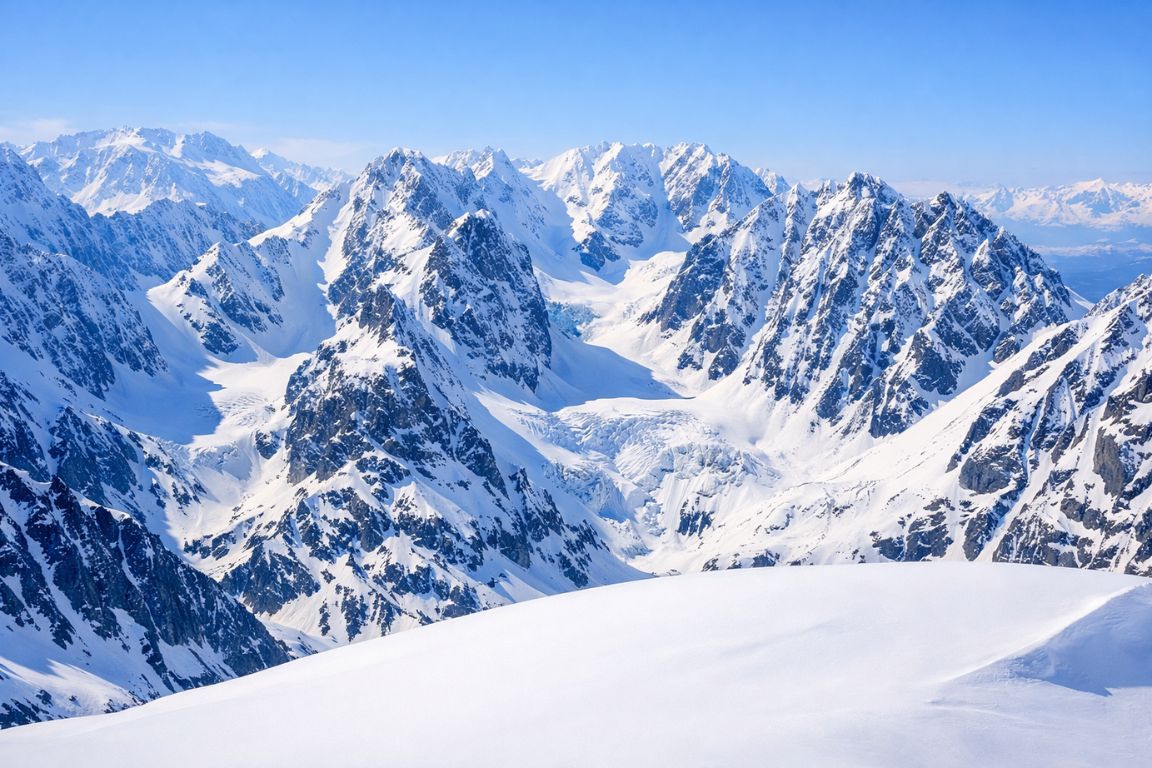
Lyngen Alps region (60-100km east) delivers spectacular alpine terrain with 1,200-1,800m mountains and glaciers, though requiring extended tours (6-8 hours total) due to distance.
Tromsdalen mainland valleys (10-20km) offer convenient options during marginal snow conditions closer to city, though less dramatic scenery and more restricted trail networks.
Table: Common Snowmobile Destinations from Tromsø
| Location | Distance | Drive Time | Terrain Type | Scenic Quality | Snow Reliability | Best For | Used By |
|---|---|---|---|---|---|---|---|
| Kvaløya Mountains | 20-35km W | 30-45 min | Mountains, frozen lakes, coastal | Excellent | Very Good | Standard tours | Most operators |
| Breivikeidet Area | 15-25km | 20-35 min | Valleys, forests, moderate peaks | Good | Good | All tour lengths | Many operators |
| Lyngen Alps | 60-100km E | 75-120 min | High alpine, glaciers, dramatic | Outstanding | Excellent | Extended/multi-day | Specialist operators |
| Tromsdalen Valleys | 10-20km | 15-30 min | Low mountains, forests | Moderate | Moderate | Short tours, backup | Budget operators |
| Kattfjord Region | 25-40km S | 35-50 min | Fjord views, mountains | Very Good | Good | Standard tours | Some operators |
| Sommarøy Area | 60-70km W | 75-85 min | Coastal Arctic, islands | Very Good | Good | Extended tours | Adventure operators |
Kvaløya popularity stems from dramatic scenery combined with reasonable 30-45 minute transport times and reliable snow throughout season (November-April).
The scenic quality hierarchy shows Lyngen Alps offering most spectacular alpine terrain though requiring 75-120 minute transport each way limiting casual visitor access.
Snow reliability varies with higher elevations (Kvaløya peaks 400-800m, Lyngen 1,200-1,800m) maintaining snow longer (October-May) versus lower valleys (Tromsdalen) being marginal.
Trail network density affects experience with well-established Kvaløya routes providing varied options versus limited Tromsdalen trails creating repetitive shorter tours.
Photo opportunity differences show Lyngen Alps delivering dramatic mountain backdrops professional quality, while Breivikeidet offering pleasant scenery without exceptional visual impact.
The transport time trade-off balances maximizing riding time (closer locations) versus accessing better scenery (distant locations), with most operators choosing middle-ground Kvaløya.
Frozen lake riding on Kvaløya provides unique experience cruising across 1-2km ice-covered lakes impossible by other means, creating highlight moments.
Coastal viewpoint stops at Kvaløya western edges show Arctic Ocean and outer islands, providing spectacular maritime Arctic scenery framing photos.
Weather protection varies by location with valley routes (Breivikeidet) offering wind shelter versus exposed mountain passes (Kvaløya ridges) experiencing severe windchill.
Want the same mountains at a gentler pace with a soup stop instead? Check the relaxed Lyngen Alps tour.
For complete details on buses, taxis, car rental decisions, and walking routes between attractions, see our comprehensive Tromsø transportation guide.
What Safety Concerns and Risks Exist?
Cold exposure creates primary risk with -20°C to -30°C windchill causing frostbite within 15-30 minutes on inadequately protected skin, requiring constant monitoring.
Collision risks from inexperienced riders, poor visibility, or excessive speeds create potential injuries ranging from minor bruises to serious trauma though statistically rare with guided tours.
Getting stuck in deep snow happens occasionally requiring group effort extracting machines, with lone riders (on private tours) facing dangerous situations if stuck without assistance.
Avalanche danger exists in mountain terrain during unstable conditions, with responsible operators avoiding high-risk areas and monitoring avalanche forecasts before departing.
Check your travel date before arranging other plans. The eight-hour Lyngen snowmobile day includes transfers, warm gear and a soup meal. Check Lyngen Snowmobile Safari Dates
Table: Snowmobile Safety Risks and Prevention
| Risk Factor | Likelihood | Severity if Occurs | Prevention | What Happens if Occurs | Operator Response | Your Protection |
|---|---|---|---|---|---|---|
| Frostbite on Face/Hands | Medium (15-20%) | Medium (painful) | Proper gear, face coverage, breaks | Stop, warm affected area, medical if severe | Shorten tour, provide warmth | Cover all skin, monitor |
| Collision with Trees/Rocks | Low (3-5%) | Medium-High (injury) | Follow trail, safe speeds, spacing | Stop, assess injury, first aid | Medical evacuation if needed | Stay on trail, brake ahead |
| Machine Tipping Over | Low-Medium (8-12%) | Low-Medium (bruises) | Proper turns, speed control | Right machine, check riders | Assistance, continue | Lean correctly, moderate speed |
| Getting Stuck Deep Snow | Medium (10-15%) | Low (delay) | Stay on trail, avoid off-track | Group assists freeing machine | Everyone helps dig out | Follow guide precisely |
| Falling Off Machine | Low (4-6%) | Medium (bruises, sprains) | Proper grip, position | Machine stops, check injury | First aid, assess continuation | Hold tight, proper stance |
| Hypothermia | Low (2-4%) | High (dangerous) | Proper layers, monitor cold | Stop immediately, warm, medical | Emergency protocols | Dress properly, speak up |
| Poor Visibility Crashes | Low (2-3%) | Medium-High | Adjust speed conditions, spacing | Stop, check injuries | Assess severity, medical | Slow in poor visibility |
| Avalanche (Mountain Tours) | Very Low (<1%) | Very High (fatal) | Avoid unstable areas, monitoring | Emergency beacon activation | Rescue protocols, emergency | Trust guide route selection |
The frostbite insidiousness shows exposure damage occurring without pain warnings until injury established, requiring proactive protection rather than reactive response.
Collision prevention through proper spacing (20-30 meters between machines) and following guide’s exact route avoiding obstacles they navigate around.
Machine tipping mechanics happen mostly during sharp turns at excessive speed or improper body weight distribution, with proper technique largely preventing rollovers.
Getting stuck scenarios typically involve riders leaving established trails venturing into unmarked deep snow, with modern lightweight snowmobiles being easier to free than older heavy models.
Hypothermia progression shows inadequate clothing causing core temperature drops over 60-90 minutes of exposure, with operators trained recognizing early symptoms (excessive shivering, confusion, poor coordination).
Poor visibility during active snowfall or ground blizzards reduces sight to 10-20 meters, requiring speed reduction and increased following distance preventing rear-end collisions.
The insurance excess responsibility shows participants liable €1,000-3,000 for machine damage from collisions or negligent operation, with some operators offering damage waiver (€30-50) reducing liability.
Emergency communication systems include guides carrying radios or satellite phones enabling contact with base if medical evacuation or mechanical assistance needed.
Trail grooming status affects safety with well-maintained packed trails being safer than un-groomed powder trails hiding obstacles (rocks, stumps) under fresh snow.
Weather cancellation policies show tours postponing during extreme cold (below -25°C to -30°C), whiteout conditions (zero visibility), or high avalanche risk protecting participant safety.
How Does Snowmobiling Compare to Dog Sledding?
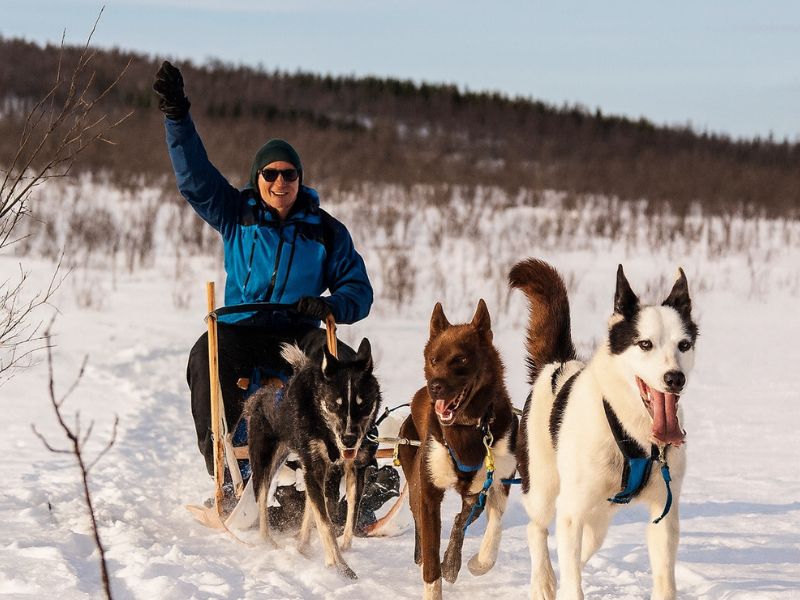
Snowmobiling offers faster speeds (30-60 km/h vs 15-25 km/h), longer distances covered (40-60km vs 5-15km), and more driver control versus dog sledding’s natural pace.
Dog sledding provides quieter natural experience with animal connection and traditional authenticity versus snowmobiling’s motorized adrenaline and mechanical nature.
Physical demands differ with snowmobiling requiring less leg strength (sitting vs standing) but more cold tolerance (windchill) and longer sustained concentration.
Cost comparison shows snowmobiling costing €250-300 versus dog sledding €200-250 with similar tour structures though different activity durations and value propositions.
Table: Snowmobile vs Dog Sledding Direct Comparison
| Factor | Snowmobile Tours | Dog Sledding Tours | Which Is Better | Considerations |
|---|---|---|---|---|
| Cost | €250-300 standard | €200-250 standard | Dog sledding (cheaper) | €50 difference not huge |
| Speed/Distance | 30-60 km/h, 40-60km | 15-25 km/h, 8-12km | Snowmobile (more ground) | Preference dependent |
| Nature/Authenticity | Motorized, mechanical | Traditional, animal-powered | Dog sledding (authentic) | Connection to nature |
| Driver Control | Full throttle/brake/steering | Limited speed control only | Snowmobile (more control) | Experience preference |
| Physical Demand | Sitting, arms, cold exposure | Standing, legs, moderate cold | Dog sledding (less cold) | Different challenges |
| Age Minimum | 18+ driver (12+ passenger) | 16+ driver (5+ passenger) | Dog sledding (family friendly) | Age restrictions |
| Noise Level | Loud engine noise | Quiet (just dogs, sled) | Dog sledding (peaceful) | Atmosphere preference |
| Wildlife Impact | High (noise, emissions) | Low (natural, quiet) | Dog sledding (eco-friendly) | Environmental concern |
| Adrenaline Factor | High speed thrills | Moderate excitement | Snowmobile (more thrilling) | Adventure level |
| Animal Interaction | None | Petting dogs before/after | Dog sledding (unique) | Animal lovers |
The speed advantage shows snowmobiling covering 3-4x distances enabling reaching remote locations impossible on dog sleds, appealing to distance-oriented adventurers.
Authenticity debate favors dog sledding as traditional Arctic transport method with 4,000+ year history versus snowmobiles being 20th-century motorized conveniences.
Environmental impact shows snowmobiles producing noise pollution disrupting wildlife and exhaust emissions versus dog sledding’s minimal environmental footprint.
Family accessibility differs with dog sledding accepting kids 5+ as passengers and 12-16+ driving versus snowmobiling requiring 18+ drivers limiting family participation.
The experience quality preference splits between snowmobile enthusiasts loving speed and control versus dog sledding romantics preferring natural quieter experiences.
Practical considerations show snowmobiling operating in worse weather (can ride through active snow) versus dog sledding preferring calmer conditions for animal welfare.
Photography opportunities favor dog sledding with quieter stops enabling better wildlife observation and more photogenic animal subjects versus mechanical snowmobiles.
Value proposition shows dog sledding providing unique animal interaction and traditional culture versus snowmobiling delivering modern adventure and greater wilderness access.
The “do both” recommendation suggests visitors with time and budget experiencing both activities getting complementary Arctic perspectives rather than choosing one.
What Are Common Mistakes and How to Avoid Them?
Inadequate gloves represents most common complaint with visitors assuming provided gear includes gloves discovering cold numb hands within 30 minutes, bringing proper gloves essential.
Throttle jerking from beginners applying aggressive pressure creates sudden acceleration losing control or causing whiplash, requiring smooth gradual thumb pressure instead.
Following too closely behind lead machines risks collision if they brake suddenly, maintaining 20-30 meter spacing provides safe stopping distance at touring speeds.
Letting go handlebar to take photos while moving creates immediate loss of control with both hands required at all times, stopping completely for photos essential.
Discover what fits this part of your trip. The eight-hour Lyngen snowmobile day includes transfers, warm gear and a soup meal. Explore Lyngen Alps Snowmobile Safari
Table: Common Snowmobile Tour Mistakes
| Mistake | Why It’s Wrong | Consequence | Solution | How to Verify | How Common |
|---|---|---|---|---|---|
| Inadequate Gloves | Operators often don’t provide | Numb frozen hands 30 min | Bring heavy ski gloves -30°C | Check included gear list | Very Common (40%) |
| Aggressive Throttle | Jerky control, whiplash | Loss of control, discomfort | Smooth gradual thumb pressure | Practice session | Common (30%) |
| Following Too Close | Collision risk | Rear-end crash | Maintain 20-30m spacing | Visual distance | Common (25%) |
| Taking Photos While Moving | Loss of control | Crash, injury | Stop completely for photos | Don’t do it | Moderate (15%) |
| Insufficient Base Layers | Windchill extreme | Hypothermia risk | Thermal top/bottom essential | Wear from hotel | Common (25%) |
| Not Braking Early Enough | Ice reduces stopping | Collision, going off trail | Brake well before turns | Practice in session | Common (30%) |
| Stiff Arms/Body | Vibration fatigue | Arm exhaustion, poor control | Relaxed flexible posture | Self-awareness | Common (20%) |
| Ignoring Hand Signals | Miss important info | Dangerous situations | Watch guide constantly | Know signals | Moderate (15%) |
| Leaning Wrong Direction Turns | Tipping risk | Machine rolls, injury | Lean into turns (inside) | Instruction review | Moderate (20%) |
| Cotton Clothing | No insulation when damp | Cold misery | Synthetic/wool only | Check materials | Common (25%) |
The glove discovery happens at mountain bases too late to purchase proper equipment, forcing participants riding with inadequate hand protection suffering throughout.
Throttle control mastery requires 15-20 minutes practice with most beginners starting jerky then smoothing out, though some never achieving finesse creating uncomfortable rides.
Spacing discipline challenges begin when convoy bunches up on straightaways with nervous riders unconsciously closing gaps, requiring conscious distance maintenance.
Photo temptation causes dangerous situations with riders attempting one-handed operation to grab phones, with operators strictly prohibiting photography while machines moving.
Base layer insufficiency shows cotton t-shirt wearers becoming dangerously cold within 60 minutes despite thermal suits, with sweating then cooling creating hypothermia risk.
Early braking importance exceeds car driving with snow/ice reducing stopping power requiring 2-3x distances, catching drivers used to immediate stops on pavement.
Arm tension creates rapid fatigue with locked elbows and death-grip handlebar causing forearm burn, versus relaxed flexible grip enabling longer comfortable riding.
Hand signal ignorance from distracted riders missing guide’s warnings about upcoming turns, stops, or hazards creating dangerous unprepared responses.
Turn leaning confusion shows some riders instinctively leaning away from turns (outside lean) causing tipping versus proper inside lean helping machine track.
Check your travel date before arranging other plans. The eight-hour Lyngen snowmobile day includes transfers, warm gear and a soup meal. Check Lyngen Snowmobile Safari Dates
FAQs
How much do snowmobile tours in Tromsø cost?
Standard 3-4 hour tours with 90 minutes riding cost €250-300 per person including transport, gear, instruction, fuel. Short 2-hour tours cost €180-230, extended full-day €350-450. See the current price for the full-day Lyngen Alps safari
Published market prices can date quickly. Check your actual travel date before arranging other plans, then review the live total for this 8-hour shared Lyngen safari. Check The Lyngen Safari Total
Do you need a driver’s license to drive snowmobiles?
Yes, valid driver’s license required for operating snowmobiles (age 18+) regardless of public or private land. Passengers (ages 12-16+ depending on operator) don’t need licenses.
Discover what fits this part of your trip. The eight-hour Lyngen snowmobile day includes transfers, warm gear and a soup meal. Explore Lyngen Alps Snowmobile Safari
Is snowmobiling difficult or tiring?
Moderate difficulty requiring arm strength, concentration, and cold tolerance. Most visitors learn basics in 15-20 minutes though fatigue from cold exposure, vibration, and position accumulates over 60-90 minutes.
What should I wear snowmobiling in Tromsø?
Thermal base layers (top/bottom), heavy ski gloves -30°C, ski goggles, neck warmer, proper boots, 2 pairs warm socks. Thermal suits provided but gloves, neck warmers, and base layers required.
Check the supplied gear before buying or packing extra equipment. The eight-hour Lyngen snowmobile day includes transfers, warm gear and a soup meal. Explore Lyngen Alps Snowmobile Safari
Can kids do snowmobile tours?
Minimum ages typically 18+ for driving (requires license), 12-16+ for passengers depending on operator policies. Some family tours allow younger passengers (8+) on special machines.
Check your travel date before arranging other plans. The eight-hour Lyngen snowmobile day includes transfers, warm gear and a soup meal. Check Lyngen Snowmobile Safari Dates
Is snowmobiling safe?
Generally safe with professional guides and proper equipment though inherent risks exist including cold exposure, collisions, and tipping. Insurance excess €1,000-3,000 if damage occurs from negligence.
Discover what fits this part of your trip. The eight-hour Lyngen snowmobile day includes transfers, warm gear and a soup meal. Explore Lyngen Alps Snowmobile Safari
How to Choose and Book Your Snowmobile Tour
Research operator reputations reading reviews focusing on machine condition, guide quality, and group size accuracy rather than just comparing prices.
Book 3-4 weeks ahead peak December-February season securing preferred dates and smaller group tours before they fill with larger groups.
Choose tour length based on experience level: first-timers choosing short €180-230 tours testing interest, enthusiasts booking standard €250-300 or extended €350-450.
Verify driver’s license requirements confirming you have valid license and checking passenger age minimums if bringing kids or teens.
Prepare proper clothing buying heavy winter gloves (€40-100), ski goggles (€40-150), and neck warmer (€15-30) before arrival since operators rarely provide these items.
Consider two-person versus single snowmobile options with shared machines (€250-300 per person) saving versus solo riding (€300-400) guaranteeing continuous driving.
Check insurance excess understanding liability (€1,000-3,000 typical) for machine damage, with optional damage waiver (€30-50) reducing exposure.
Plan realistic timing allowing full half-day (3-4 hours) without cramming schedules, avoiding back-to-back activities since snowmobiling creates more fatigue than expected.
For expertly guided snowmobile safaris accessing pristine Arctic wilderness, book at / where we prioritize safety and experience quality.
Want the aurora chance built into the ride instead? Check the evening wilderness snowmobile tour.
Glossary
- Thumb Throttle: Acceleration control on right handlebar operated by pressing down with thumb, standard snowmobile throttle design.
- Two-Up Riding: Two-person snowmobile operation with one driver and one passenger, standard for tourism tours with alternating drivers.
- Windchill: Perceived temperature reduction from motion creating 10-15°C colder feeling at speeds 40-50 km/h, critical safety factor.
- Insurance Excess: Liability amount (€1,000-3,000) participants pay for machine damage from collisions or negligent operation.
- Track: Rubber belt underneath snowmobile providing propulsion and traction on snow, equivalent to car tires.
Discover what fits this part of your trip. The eight-hour Lyngen snowmobile day includes transfers, warm gear and a soup meal. Explore Lyngen Alps Snowmobile Safari
Key Takeaways
- Snowmobile tours in Tromsø cost €180-350 for 2-4 hour experiences with 1-2 hours actual riding through Arctic wilderness. Standard €250-300 tours provide 90 minutes riding representing best value with transport, thermal suits, helmets, instruction, fuel included.
- Tours operate November-April with peak December-February requiring 2-4 weeks advance booking. Two-person snowmobiles standard with adults alternating driving every 30-45 minutes, single machines costing €50-100 extra.
- Minimum age 18+ for solo drivers requiring valid driver’s license, 12-16+ as passengers depending on operator.
- Physical demand moderate with sitting/steering requiring less leg strength than dog sledding but more cold tolerance from windchill.
- Expect speeds 30-60 km/h through Kvaløya mountains (20-35km), Breivikeidet areas (15-25km), or Lyngen Alps (60-100km) with photo stops every 20-30 minutes.
- Critical clothing: thermal base layers top/bottom, heavy ski gloves -30°C (usually not provided), ski goggles, neck warmer, proper boots. Windchill from 40-50 km/h makes -15°C feel like -25°C to -30°C requiring superior cold protection.
- Control mechanics: thumb throttle right handlebar, brake lever left, steering like bicycle, body weight leaning into turns. Not included: personal winter layers, gloves often, insurance excess €1,000-3,000 if damage. Safety risks: frostbite from cold exposure (15-20% experience discomfort), collision risks (3-5% incidents), machine tipping (8-12% occurrence), getting stuck (10-15%).
- Tours visit Kvaløya mountains most commonly, Breivikeidet valleys for shorter, Lyngen Alps for extended serious tours.
- Comparison to dog sledding: faster speeds (30-60 vs 15-25 km/h), longer distances (40-60 vs 8-12 km), more adrenaline but less authentic/quiet.
- Best operators: Villmarkssenter (€280-320 premium), Arctic Guide (€250-280 mid-range), Budget operators (€180-230 basic).
- Common mistakes: inadequate gloves (40% regret), aggressive throttle (30%), following too close (25%), insufficient base layers (25%).
- Photography limited to stops every 20-30 minutes, action shots while moving impossible for drivers.
- Evening Northern Lights combo tours €280-400 pair snowmobiling with aurora hunting. Plan complete snowmobile adventures at /.
Written by Erik Johansen, Tromsø tour guide for the past 15 years, specializing in Arctic wilderness motorized adventures and snowmobile safety.
Check Your Tour Date
Check your Lyngen safari date before filling the day. The eight-hour trip includes bus and ferry transfers, winter gear, a guided snowmobile ride and soup.
Adjust activity, timing or group needs
General recommendations: confirm dates and group requirements
There is no like-for-like free substitute for operating a snowmobile. If you decide against a tour, use the clothing guidance for a self-guided winter walk around Tromsø and enjoy accessible viewpoints without the driving, licence and transfer commitments.
Compare Your Group’s Real Costs
Use current quotes in the same currency. Include transport, fuel, parking and equipment in your DIY total. Include all participants and extras in the tour total.
Booking takes place with the provider. Prices, exact departures and available options are shown there. We may earn a commission when you book through these links.